


-
By:
BBC

-
Translated by: Blerta Haxhiu

- June 5, 2026 08:20
- Share to:
For more than a century, Mumbai’s dabbawalas have provided hot, home-cooked meals to millions of office workers, keeping the city running with remarkable precision. Today, the pandemic, work-from-home orders and online food delivery apps have sharply reduced demand, putting the survival of this unique and age-old profession to the test. Yet every morning, the men with their steel boxes continue to move between trains and platforms, preserving an irreplaceable tradition.
Every morning, before the city fully wakes up, men wearing caps and white shirts arrive at Mumbai's suburban railway stations on bicycles loaded with lunch boxes.
They load these boxes onto local trains, travel through the city, and then disperse on foot or by bicycle to deliver hot, home-cooked meals to office workers.
After a short break, they do the entire process in reverse – collecting the empty lunch boxes and returning them to the kitchens they came from, by late afternoon.
These people are called "dabbawalas" and for more than a century they have fed Mumbai through a delivery system so precise that it has become famous around the world.
The lunch boxes – known as “dabba” – usually contain rice, lentils, a vegetable dish, roti (traditional Indian flatbread) and sometimes meat, all cooked fresh in homes on the city’s outskirts.
For generations of office workers in Mumbai, home-cooked meals have remained closely tied to family routines, culture and food preferences. As a result, the daily lunch box has become an essential part of working life in this fast-paced city.
Each box carries an alphanumeric code that tells the dabbawala where it came from, where it should be delivered, which floor and building it should go to, and how to get back. No apps or GPS systems are used – just a method of working passed down through generations by workers who instinctively know the trains and streets of Mumbai.
also A day in the hottest place in India, where temperatures approach 50 degrees Celsius
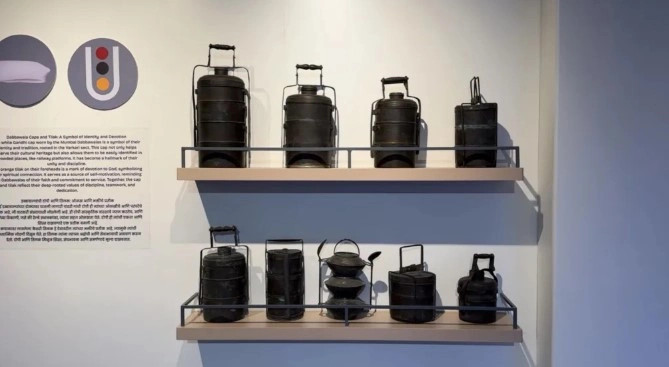
Symbol of Mumbai
The profession has brought Mumbai – India’s financial capital – international attention. The prestigious Harvard Business School has studied the system as a shining example of low-cost logistics. In 2003, even King Charles spent some time with the dabbawalas during a visit to Mumbai.
This service became a symbol of something Mumbai prided itself on: despite the daily hustle and bustle, there were still things that worked with unwavering precision.
However, today the men who built this reputation are facing serious difficulties in surviving.
The dabbawala system is believed to have begun in the late 19th century, when Bombay (now Mumbai), then under British colonial rule, was rapidly expanding and office workers needed a way to have fresh, cooked food delivered to their homes during the workday.
At a time when restaurants and canteens were scarce, taking food from home was of great importance in a city where food was closely linked to culture, religion, and family life.
The origin of this idea is usually attributed to a Parsi banker who hired a man to pick up his lunch from home every morning, deliver it to his office, and return the empty box later. It was a simple system, but one that quickly spread.
In 1890, a man named Mahadeo Bachche organized the system in the form it is known today, employing about 100 workers, according to the book "Mumbai's Dabbawala: The Uncommon Story of the Common Man" by author Shobha Bondre.
Early dabbawalas transported lunch boxes on bicycles and marked them with colored thread so that they could be sorted and returned accurately. Over time, these markings were replaced by a unique alphanumeric code system, as deliveries began to rely on bicycles, motorbikes, and Mumbai's suburban rail network.
At the peak of their activity, nearly 4.500 dabbawalas delivered around 50.000 lunch boxes every day across Mumbai, according to organizations that regulate and monitor the service.
But the Covid-19 pandemic severely shook this system. When offices closed and people started working from home, daily deliveries were no longer as necessary as before.
Dabbawalas that once served 20 or 25 office workers a day were suddenly left with only a few customers – and some of them had no customers at all.
With little savings to support themselves financially, many of them were forced to abandon the profession.
Although offices have reopened, work-from-home and hybrid models have significantly reduced the daily demand that once kept Mumbai's dabbawala network in full operation.
"After the lockdown, working from home became much more common," says Kiran Gavande, secretary of the Mumbai Lunch Box Suppliers Association.
"Some people now go to the office only two or three times a week. This has had a huge impact on Mumbai's dabbawalas."
The number of registered dabbawalas has fallen from around 4.500 in 2018 to around 1.500 today, according to their association.
At the same time, Mumbai's relationship with food has changed. Online ordering apps like Swiggy and Zomato, along with a growing number of virtual kitchens offering restaurant meals at low prices, have given people a new range of choices.
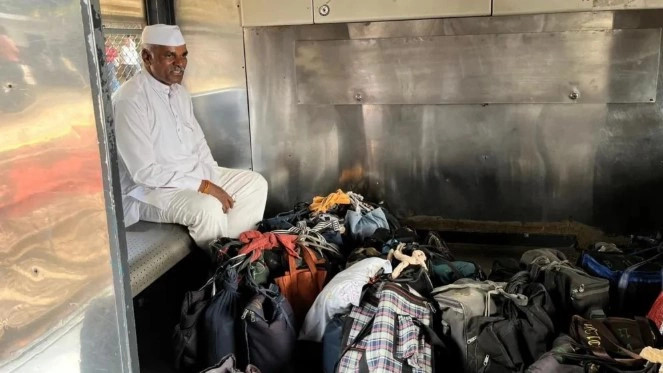
Unpaid work
Dabbawalas once had little competition – delivering home-cooked meals for just 2.000 rupees (around $21; £16) a month – today they compete with everything from biryani to burgers, just a click away.
Balu Bhagu Shinde worked as a dabbawala for 20 years before retiring. The 41-year-old used to earn around 20.000 rupees a month delivering lunch boxes to 15 to 20 customers a day - enough to support a family of five in one of India's most expensive cities.
also Weddings that lead to financial crisis
But at the end of 2020, he had only two clients left.
He waited for the offices to reopen, but customers did not return in significant numbers. Eventually, Shinde became a tuktuk driver, a small three-wheeled vehicle.
He now earns about 15.000 rupees a month – less than when he was delivering lunch boxes – but is limited by a lack of options.
“No customers, no money - what do we do?” says Shinde.
"We are trying to survive. We are reducing household expenses, but I have three children for whom education is more important. From time to time I have been forced to take out loans."
For those who have stayed, survival increasingly means working two jobs just to make ends meet.
Mauli Bachche, 40, has been a dabbawala for two decades. His day begins at 7 a.m. from his home in a suburban Mumbai neighborhood. By 10:30 a.m., he has collected lunch boxes from homes and small kitchens in the neighborhood and loaded them onto trains heading to offices across the city.
In the early afternoon, the deliveries end. At 14:00 PM, the return cycle begins.
Then comes his second job, where he collects small savings deposits from shop owners on behalf of a finance company, before returning home around 10 p.m. By then, he has worked up to 15 hours and traveled more than 100 km into the city.
He has two children - a daughter in her final year of school and a son in 10th grade who hopes to become an athlete.
"Before Covid, I was delivering 25 meals. Some of those people are now working from home, some have lost their jobs – now there are only 15 clients left," he says.
"The income from working as a dabbawala is very low. Everyone does more than one job."
For the older men in this business, the concern is not so much for themselves - but for what comes after them.
"We used to be able to survive in our time," says Baban Kadam, who has worked as a dabbawala for 35 years. "But with the cost of living today, the younger generation won't go into this job. Everyone wants a better-paying job or business."
Ramdas Baban Karvande, president of the Mumbai Lunch Box Suppliers Association, says the network no longer delivers to all parts of the city like it used to.
The association is now considering shift work so that dabbawalas can take on part-time jobs in addition to morning deliveries.
“This will allow them to earn from other jobs or small businesses,” says Karvande.
Even so, he is not sure how long the system can survive.
also The Balkans "in competition" with bakeries in Germany
"For now we are continuing," he says. "But we cannot say what will happen in the future."
For now, however, every morning Mumbai's trains carry men shuffling between crowded platforms with piles of steel boxes - preserving a tradition that was once a symbol of the city's pace but is now in danger of being left behind.

