


-
By:
Enis Bytyqi

- November 19, 2023 12:00
- Share to:
The poems in Halil Matoshi's newest work are a deep journey into the personal and reflections on life and the essential impact of his time spent in prison. Through verse he finds freedom, breaks free, challenges fate and becomes his own master
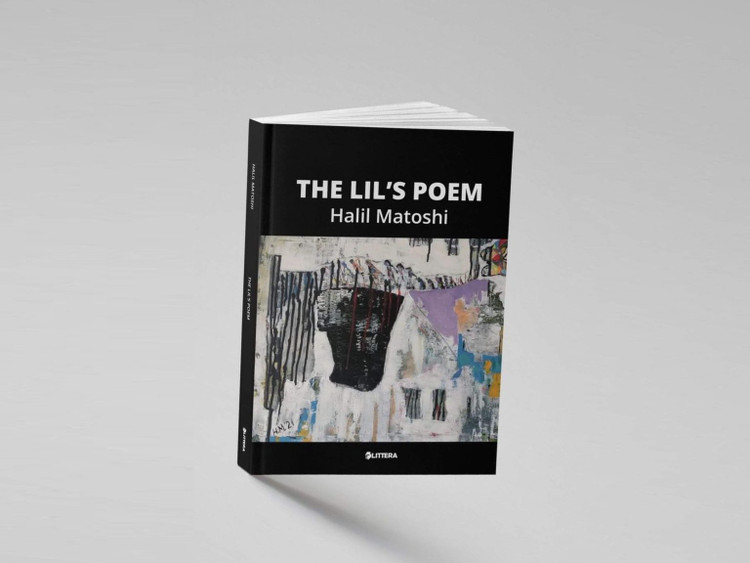
The foyer of the "Oda" theater in Pristina was not the place of the spoken word but, above all, of the written word. The drama does not take place on stage, but through verses. And, Halil Matoshi's poetry has the power to create drama, scene, mood and emotion. Next testimony: "The Lil's poem". The 162-page poetry book is Matoshi's newest work, and its launch on Friday night brought together an ensemble of lyric lovers, fellow poets and supporters eager to explore the depths of poetry.
"The Lil's poem" is a deeply personal journey of the journalist and poet's reflections on life and the essential impact of his time spent in prison. Matoshi, who often expresses himself in painting, chose one of them for the front of the book. "Memory of water" is the painting, which represents the author's time in the concentration camp in Zabela Pozharevci, as a preamble to the constitution of Halil, in the constitution where freedom of expression wandered everywhere looking for its place.
"We are dealing with an experienced author, with an accomplished, cultured and unique author who has an easily identifiable style, with poems and verses that cannot be confused with others and with a work that cannot leave the reader indifferent". Donika Dabishevci, poet, editor of "The Lil's Poem", said in her introductory speech. She emphasized that in this book, as in Halil's other seven books, the philosophical spirit is combined with the inner lyrical delicacy of the poems inside this book, engraved as personal references.
Nerimane Kamberi, poet and literature researcher, present at the discussion panel, commented on a poem with the same name as the book itself, "The Lil's poem", reliving the spring of 1999, when she received the news about her fate. Halil's sad.
"Halili's poetry has a power to bring you back to a timeless time with such a simple title, his poetry is rhythmic, geometric and philosophical, it reminds us that once Halili had studied philosophy and together with Kierkegaard he wanted to return melancholy ", Kamberi said.
also The poetry of documenting the Kosovo war
Through the discussion of this collection of poems, it is understood that they talk about war, but not only about it. There are also late reflections of the author. The poet introduces numerous characters, small and big, important and less important, into the dance, taking them on his journey from the past in "Kino Rinia" in Pristina to the train station in Frankfurt. He introduces the reader to the labyrinths of his life through verses that present an ethno-poetics for Kosovo, before and after the war.
"Analyzing the representation of trauma and memory in literature, the poetry of this book is a presentation of the ethos of the Albanian ethnologist, presented as a reminiscence of the historical memory itself, the author through the poem pours out his personal experience, merging in it the national experience, the horror, the cry , the drama and tragedy of a people, said Blerina Rugova-Gaxha, poet and literature researcher, who commented on Matoshi's work in this memoir of his through poems.
Matoshi being a direct experiencer of the brutality of the war, his book comes out as a cry of the soul to become a poetic testament of the experiences of the war, where through figurative language he tries to present the attempts to describe the physical pain. But, he is more sensitive in terms of spiritual suffering, like a wound that remains in the body.
"My poems about the prison are realistic, they have some elements of magical realism, but they are practically real", said the author, adding that in his poems about the Prison of Pristina he tried to convey to young readers the feeling of a political prison, what it was like to go to jail for speaking out.
Through the memoir of prison literature, this book presents his way of life behind bars, where his soul writhes under the pressure of losing every human trait, where death lies like a time bomb.
"Prison poetry should be written and read, without deifying the prison, and mocking it, because by mocking it we become good not to end up in prison", said Matoshi, recalling that an author does not he thinks more about himself than he thinks about those who remain, his country, his people.
also Poetry – unsurpassed in documenting war
He also spoke about his poem dedicated to the noise of the prison chains as a symbol of the prison itself, he goes as far as naming the rattle of the chains, where he says that the chains do not sound, but they "clink" perpetuating it as a sound in memory.
Another characteristic element of this work is the language, the language used by the poet not only as a means of expression, but as his ability to distill such complex feelings through his language. "I write in my mother's language, she used Geghnish as a scream, as a cry in my poems, I am captive in Geghnish!", he said.
The writer and actor Shpëtim Selmani made the poem "The Lil's poem" sensitive and poetic, who with his sensitivity in the reading freed from any context resounded drama from the verses that narrated Halil's experiences. The next poem read by Selmani was "Boshi çe t tremb", a poem which, in addition to the author's personal reflection on his encounter with aging, also transmitted a dose of comedy.
The author Halil Matoshi has said for KOHE that poetry is a form of art, which every time it is thought to be leaving comes back as a reminder.
"It comes back to us to remind us what our goals were, our efforts, it shows us where we were and where we are today", said Matoshi.
also The drama of identity and resistance in times of oppression
As one of the best contemporary Albanian poets, Nexhmedin Spahiu, a political scientist, rated the book as a work of pain and the experience of sadness told in a completely original way.
"This work responds to the Kosovar environment very well, both from the psychological point of view and from the poetic articulation", he said.

