


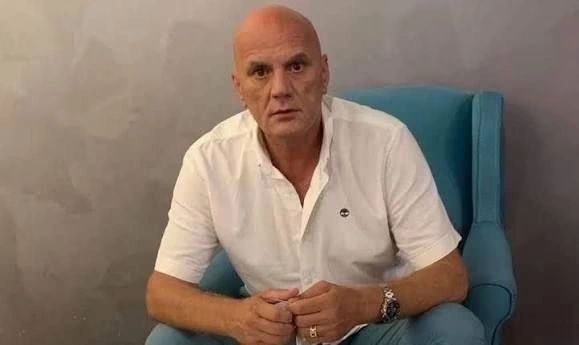
Ish-deputeti i Lidhjes Demokratike të Kosovës, Gani Geci, është liruar nga paraburgimi, ku po mbahej nën dyshimin për kanosje të gazetarit Lirim Mehmetaj. Avokati Besnik Berisha ka hedhur akuza ndaj Prokurorisë Themelore në Prishtinë mbi mënyrën se si sipas tij Geci u detyrua të pranonte fajësinë.
Geci ka publikuar një foto në profilin e tij në Facebook, bashkë me njërin prej vëllezërve duke shkruar: “Rrugës për Drenicë”.
Më herët, në një shkrim në Facebook, Berisha, që ishte avokat i Gecit, deklaroi se e revokoi autorizimin si mbrojtës pasi “u përballa me një situatë që nuk do të duhej ta përjetonte askush në një shtet që pretendon se sundohet nga ligji”.
Sipas tij, Geci u detyrua të pranonte fajësinë në këmbim të lirimit nga paraburgimi. Ai ka kërkuar hetim për mënyrën se si kanë shkuar procedurat.
Ish-deputeti u arrestua më 13 tetor.
KOHA i ka dërguar pyetje Prokurorisë në Prishtinë. Sapo të ketë përgjigje, artikulli do të përditësohet.
Besnik Berisha's full post:
TODAY I REFUSED TO BE PART OF AN INJUSTICE THAT COULD HAPPEN TO ANY OF US TOMORROW!
In almost 17 years of practicing law, I have seen many injustices, I have opposed arbitrary decisions, and I have faced actions that hardly comply with the law and the most elementary principles of justice. However, what I experienced today at the Basic Prosecutor's Office in Pristina constitutes one of the most difficult experiences of my career.
Today, Mr. Gani GECI, a man with serious health conditions, brought from the hospital with his hands tied, found himself faced with a situation that no one should have to experience in a country that claims to be ruled by law.
His freedom was put in the balance with his admission of guilt!
Ne njeren ane qendronte paraburgimi, ne anen tjeter mundesia qe Prokuroria, ne shenje "mirebesimi", te kerkonte nderprerjen e tij, nese z. GECI pranonte fajesine.
This was the conditioning that I resisted and that forced me to make one of the most difficult decisions of my professional life.
I refused to be part of this procedure and revoked my authorization as a defender!
The reason is as simple as it is shocking.
Mr. GECI was held in custody due to the alleged risk of reoffending. Neither the risk of absconding nor that of tampering with evidence were accepted by the court as grounds for his deprivation of liberty.
So, what happened today with the risk of recurrence?
Did the danger cease to exist, or did the admission of guilt become the key to opening the prison door?
This is the question that must be answered, not only for Gani GECIN, but for every citizen who may find himself in his position tomorrow.
The risk of recidivism is not a condition that appears when a person denies guilt and disappears when he accepts criminal responsibility. It must be based on concrete circumstances, be objectively assessed, and cease only when the reasons that justified it cease.
On the contrary, detention ceases to be a security measure and becomes an instrument of pressure.
The documented facts are even more disturbing.
At 12:36, Mr. GECI's interrogation ended, during which he denied having threatened anyone. In that report, I expressly objected to the manner in which the procedure was conducted, the state in which he was being interviewed, and the use of detention as a form of pressure to admit to a criminal offense that he denied.
At 13:05 p.m., the second interrogation began.
At 13:10 PM, I revoked the authorization and left.
At 13:16 PM, the procedure ended with the admission of criminal responsibility and the proposal for a plea agreement.
Two reports. Same criminal offense. Two contradictory statements. Only a few minutes between them.
I am not judging Mr. GECI's personal decision. A person facing serious health problems and deprivation of liberty may experience a pressure that none of us, from the comfort of freedom, has the right to underestimate.
I am judging a practice that, according to what I experienced today, places a person in front of an unacceptable dilemma: to remain in prison while defending his innocence, or to admit guilt while hoping for the return of freedom.
This is not justice that demands truth. This risks being justice that demands surrender.
If the state has evidence of a citizen's guilt, let it present it and prove it in court. If there are legal grounds for detention, let it justify and defend them with facts.
What must not happen is that freedom becomes a reward for admitting guilt, while detention becomes a consequence of not admitting it.
No prosecutor should be able to use the hope of freedom as a means to secure a guilty plea.
As a lawyer, today I could have chosen the easy way out. To remain silent, to abide by the procedure, and to continue as if nothing unusual was happening.
I chose the other path.
I revoked the authorization, not to avoid responsibility, but to avoid putting my name, signature, and professional dignity at the service of a procedure that, in my belief, violated the principles on which criminal justice is based.
The lawyer is not there to silently follow the client's submission. He is there to protect the man precisely when the power of the state threatens to break him.
Today's case cannot and should not end with two reports filed in one criminal file.
I request an immediate response from the Chief State Prosecutor, the Chief Prosecutor of the Basic Prosecution Office in Pristina, and the competent institutions for the supervision of the legality of the actions of prosecutors.
I request a full verification of the circumstances in which the plea of guilty was proposed, of its conditioning on the Prosecution's position on pre-trial detention, of Mr. GECI's health condition and of the manner in which his will was ascertained.
If it is proven that detention was used as a means of blackmail to secure an admission of guilt, responsibility cannot end with the finding of a procedural irregularity. There must be concrete, disciplinary and criminal consequences, according to the responsibility of each person.
This case must be investigated, this practice must end, and no one should feel untouchable when it comes to human freedom and dignity.
I am not asking for special treatment for Gani GECI. I am asking that what happened today does not happen tomorrow to either my greatest opponent or the most unknown citizen of this country.
Fundamental rights do not lose their value when a person is accused of a criminal offense. It is precisely then that they must be defended with the greatest determination.
Today I didn't win a court battle. I made a decision that cost me professionally, but that preserved my conscience.
At the end of this day, my conviction is even stronger than the day I started this profession.
It's better to lose a customer defending your principles than to lose your principles keeping a customer.
Justice has no right to force a person to choose between their freedom and their conscience.
Guilt must be proven to take away a person's freedom, not accepted to give it back!