

From a modest disclosure of history, we learn about an "evolution" of the lands around the monastery as metoh (14th century), as timar and vaqf (15th century onwards), as manor and ajanllek (late 18th century ), as an agonistic contest between different tenants (1918 onwards), as unilaterally appropriated land (agrarian reform period), as nationalized land (after 1945) and, finally, as denationalized land and arbitrarily transferred to ownership of the monastery (the Milosevic apartheid period)
Col. Mehmeti & Riad Limani
The giving of 24 hectares of land to the church of Deçan was a classic case of a decision that naturally arouses outrage on ethical grounds, but at least legally it is right. Although the post-war years were available for the development of an Albanian "file", through which the multi-layered problem of property offenses and counter-feasibility would be understood, to date not even the slightest thing in the nature of a sustainable argument has been produced. . The only version that has produced endless debates, but not a solution perspective, has been the irresponsible narrative of the Vetëvendosje Movement. Since the past is often evoked in these rants, revisiting history, especially that between the two world wars, reveals a very interesting picture. The first and last impression is the perverse power of rustic corners to produce drama and intrigue, which in the conditions of polarization and heartless politicization, recruits entire social segments into its psychosis. Consequently, the "Mephistopheles" of evil is not only the priesthood of the monastery, but also the local community. From a modest unfolding of history, we learn about an "evolution" of the lands around the monastery as Metohija (14th century), as timar and waqf (15th century onwards), as fiefdom and estate (end of 18th century), as an agonistic contest between different heirs (1918 onwards), as land and unilaterally appropriated (agrarian reform period), as nationalized land (after 1945) and, more recently, as denationalized land and arbitrarily transferred to the ownership of the monastery (Milosevic apartheid period).
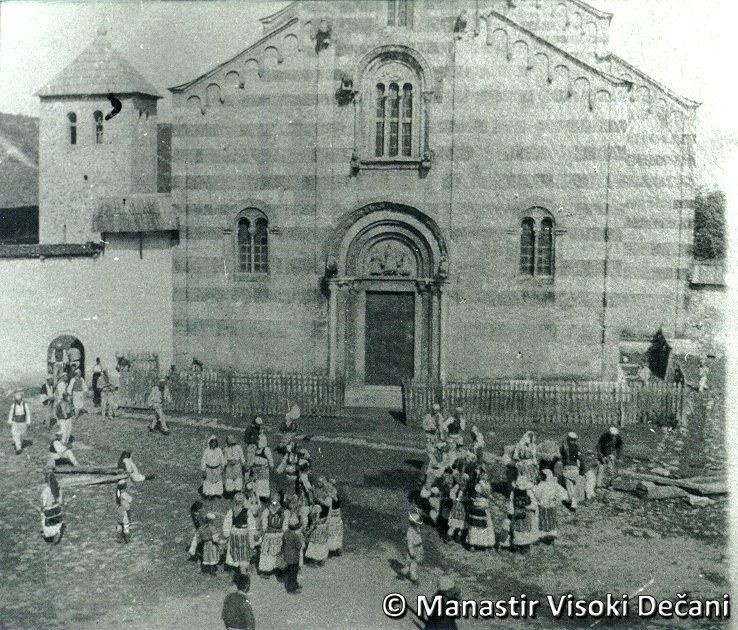
"Dom Božiji, Vlasi i Arbanasi"
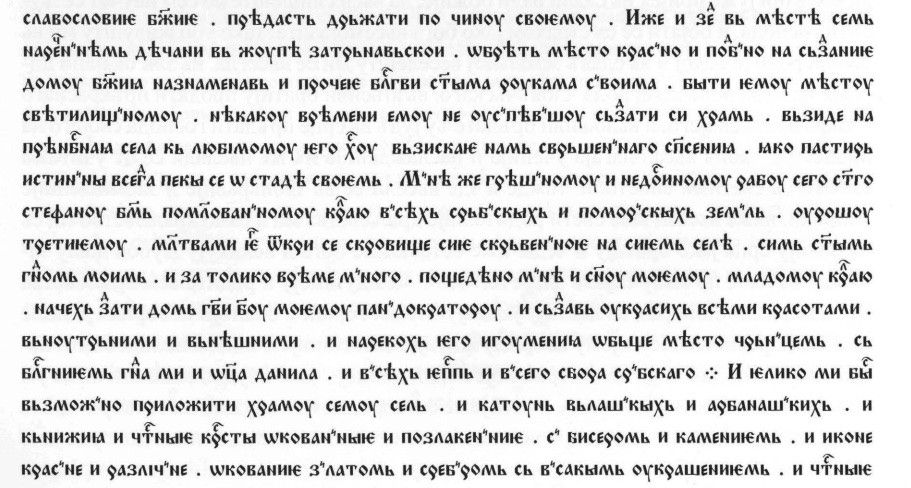
As in other cases with Hilandar, Banjë and Graçanica, the chrysobula of the year 1330 from the Serbian ruler Stefan Uroshi III, otherwise known as Dečanski, presents a detailed listing of the lands (get used to it) that are given to the monastery of Deçan. Just like 17 years earlier with the construction of the church of Saint Stephen in Banjë or seventeen years later with the construction of the church of the Archangels in Prizren, these colossal constructions were personal ventures of the Nemanjid kings who saw them as resting places or monastic spaces. in advanced age. The medieval period for the central Balkans, where multiple linguistic, cultural and social stratifications were expected, comes with little or no written sources that shed light on the everyday life of the average person. This ignorance of the realities of the lower floors of society dictated the circumstance that chrysobulls became without merit an alternative to a completely vertical reading of history. With the privileges granted by the king and the earthly properties, church buildings such as Hilandari, Banja, Graçanica, Deçani and Prizren were favored by exemption from taxes. Just to have an idea for curiosity: at that time Hilandari owned 360 villages in the central Balkans, so church property was often enriched exponentially. Such is the case with the church dedicated to the Pantocrator in Deçan, which had a total of 2097 houses. merops (legal category indicating farmers), 69 houses of sokalniks (artisans) and 266 families vlach (pastoralists). As a precious historical data from this chrysobula is the announcement that Stefan Uroshi III chose "a place called Deçan in the zhupa of Zaternava" (Иже и зде вь мѣстѣ сем нравѣм Дѣчани вь жупѣ Затрнавској), being beforehand "beautiful and suitable for building the house of God" (мѣсто красно и бильность на създаније дому Божија).
In the same chrysobulic text, the king's functionalist teachings regarding the church are criticized: it is a common place (in the original опште мѣсто equivalent to Greek κοινοβιον) for the abbess and monk. This space considered as Metohija, always according to the chrysobula raving, included two constituent and distinct socio-economic units: the villages (villages) and the Vlach and Albanian towns (катун влашких и арбанашких). relative, the metohi in question consisted of a variety of occupations, which conditioned the circumstance that local life became quite interconnected.
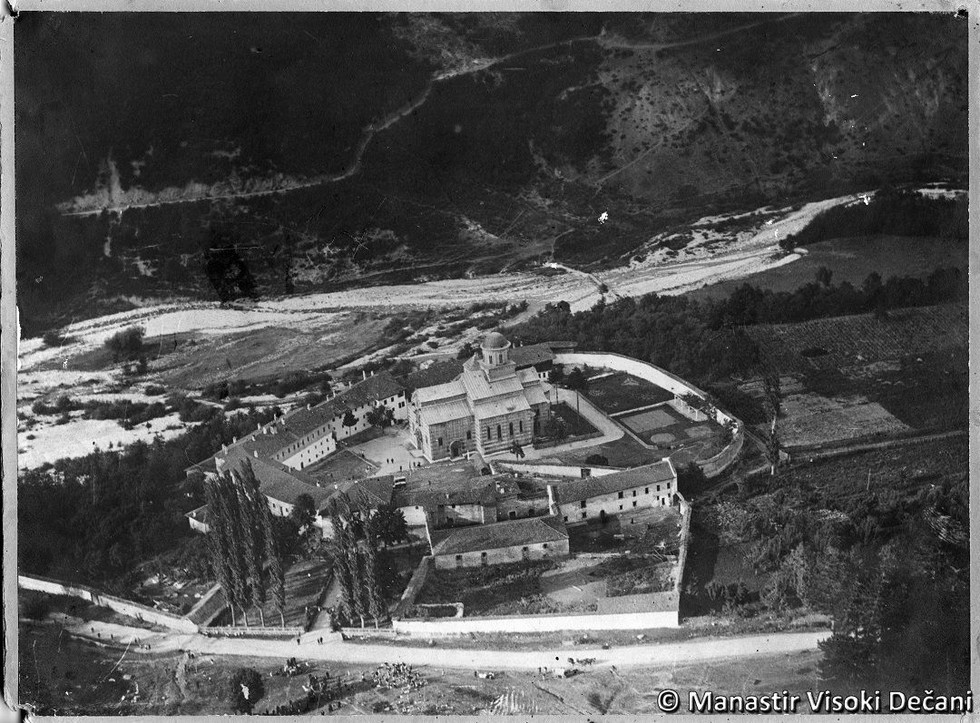
also Deçani Monastery - reconstruction in the Middle Ages on ancient foundations
Encroachments, ownership, proclamation
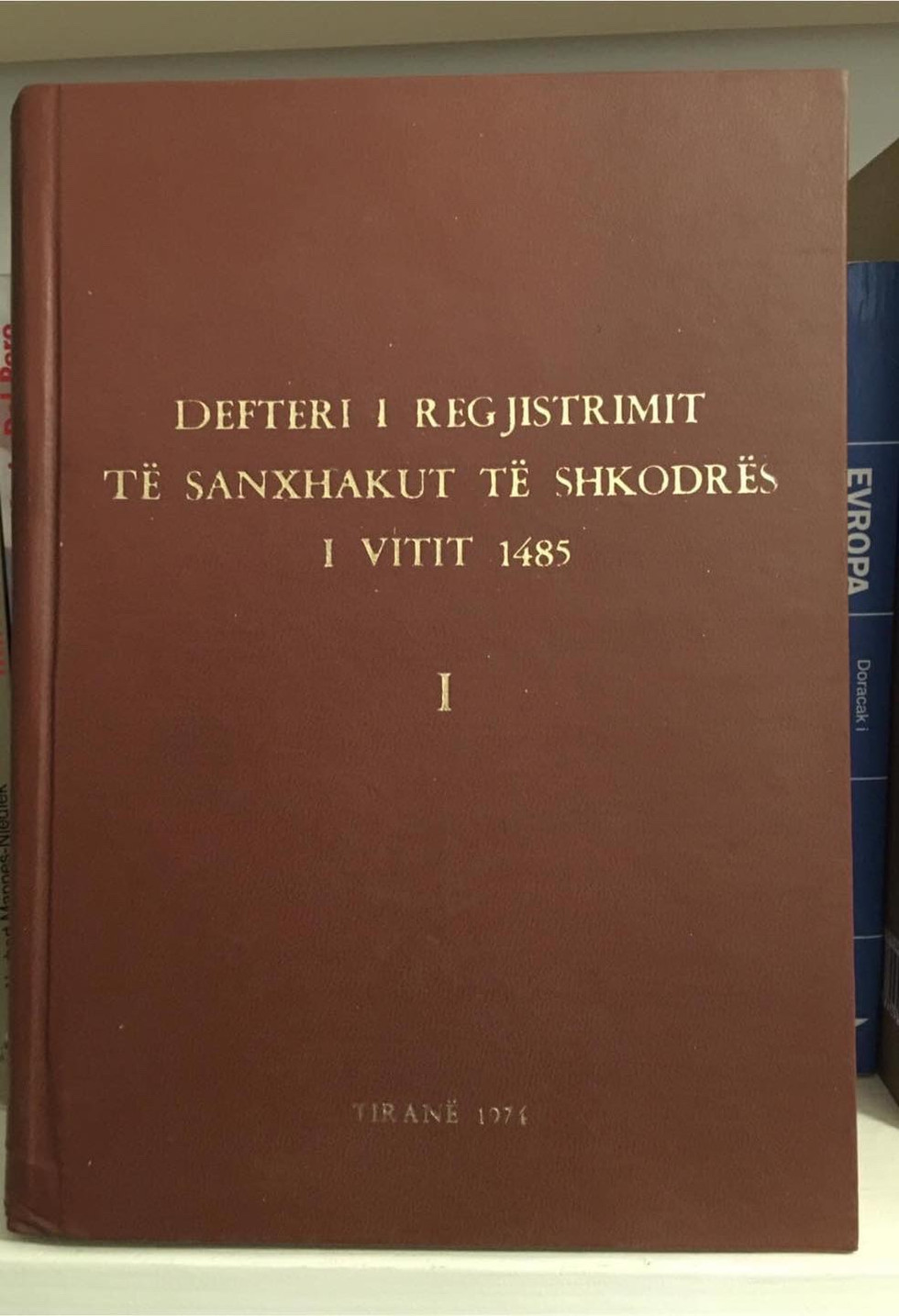
It is quite significant that the chrysobulla arrangements for property taxation for the monastery of Deçan did not have a long life. This is also proven by the visit to Deçan of princess Milica Hrebeljanović, also known by her church name as Jevgenia, in June 1397. The text of the chrysobula places the blame for the desolations and burnings on the "Ismaelites" (naroda izmailićanskih), as well as "those who ruled before" (i od onih koji su pre nas vladali). Alluding to the first chrysobull of Deçan, Milica announced the return of "previously occupied villages" (earlier oteta sela). Almost a century later, the "ownership" of the metates changed according to the new order and system. This means that what had previously been taxed to the monastery was now used by the spahi, in the name of what these lands were his "timar". Thus, according to the book of Sanjak of Shkodra from the year 1485, The funeral of Deçan, dirlik of Hasan bey, included the villages: Rugovë, Deçan, Manastir i Deçan, Gjakovë, Kosuriq, Gorazhdevc and Cernish. So, a total of 6 villages, 1 monastery, 253 "hane" houses, 78 mucerret (unmarried) and 15 fall (widow), with an annual income of 35.114 akce (Skender Rizaj, "Kosovo during the XV, XVI and XVII centuries", 1982, p. 206). Even the surrounding villages received new titles, as the word goes, Krysheci became the timar of Musa, the son of Perper Ahmet, Barani and Gllogjani, the timar of Mustafai, the son of Yahya, etc. (Mark Krasniqi, The valley of Baran, 1984, p. 25)
Agrarian experiment in "new lands"
Despite the different realities, common to some of the Balkan countries after the Balkan wars, and especially after the First World War, was the problem of agrarian reform which came as a legacy from the Austrian and Ottoman imperial past. In our case, post-Versailles Serbia, reborn as the Serbo-Croatian-Slovenian Kingdom, initiated the so-called agrarian reform (agrarian reform). The famous proclamation of December 24, 1918, where the regent Alexander announced his ambition for the suppression of serfdom and large estates, was initially experienced as if the gong had sounded for the long-awaited liberation of the poor peasants. But the reform did not have the same goals everywhere: its consequences in the Albanian villages in Sanjak, Kosovo and Macedonia bordered on what can be called denationalization and ethnic cleansing. In the "new lands", the planners in the Ministry of Agrarian were doing the calculations. The immediate goal was to destroy the large landowners in Kosovo, a step that would facilitate the deportation of Albanians to Turkey. This is the reason why Belgrade itself seemed to encourage Albanian peasants to flock to the local offices to, like peasants, gain full ownership of the lands that were legally theirs. the Sahibs (manors). The bodies that had taken over the agrarian problem targeted the Albanian owners of the manors on the basis of the distribution of temporary rent, and even those owners who were forced to leave had their property confiscated immediately. The Agrarian Directorate's mischief went so far as to invent such modalities which forced the large Albanian landowners to sell their properties at extremely cheap prices, i.e. below their real value. So, this systematic process of destroying the livelihood of Albanians affected the general pauperization (impoverishment) of the already ruined economic life. This thinned out the number of large landowners so much that on the eve of the invasion of Yugoslavia in 1940—according to an estimate by the headquarters of Military Zone III—only a few dozen people remained in Kosovo as landowners of approximately 20 to 80 hectares. earth. Thus, in a report dated March 14, 1942 by the Minister of World Affairs, Iljaz Agushi, it was stated that more than half of the property, whether private or common, owned by the Albanian population had been looted by the Yugoslav authorities (see Marlengen Verli, Colonial agrarian reform in Kosovo 1918-1941,1992, p. 91-97).
Lorenzoni: Denationalization and colonization in Kosovo
also The case of Deçan Monastery between chance as a monument and precedent
Even an Italian researcher like Giovanni Lorenzoni noticed, in his report on the problem of colonization and agrarian reform, that the division of land was done on the basis of racial affiliation and that the Albanian population could not even claim something positive from the reform ("Nessun contadino di razza e di sentimento albanese trovandosi in queste categorie e chiaro poteva aspiravi"). Thus, according to him, only army invalids, widows and orphans of the First World War benefited from law 19 of the Yugoslav state statute (First Excursions in Kosovo, 7-18 October 1941). Thus, the political goal of colonization had succeeded in denationalizing the territory ("disnationalize the territory"), replacing the autochthonous Albanian population with Serbo-Montenegro elements imported from elsewhere ("sostituendo alla popolazione autoctona albanese element serbo-montenegri importati dalla Bosnia, dalla Banato, dalla Croatia, dalla Sumadia e via dicendo
Consequently, a state of social unrest spread in Kosovo between the peasants and the landowners, where, paradoxically, the state sided with the peasants against the sahibi. Since the columns of unruly peasants in front of the agrarian offices were becoming endless, and the state had no way to turn them back since it itself proclaimed Article 42 of the Constitution, then this matter again passed into the hands of the swindling bureaucrats of the Agrarian Directorate in Skopje. In 1928, Gjorgje Kërstiqi from this Director authorized a long article with the title: "Da li dobra manastara Visoki Dečani fallow pod udar agrarne reforme" (Are the assets of Dečani Monastery subject to agrarian reform, published in Arhiv za pravni i social nauke, 1928, p. 448-460). Even at that time, fesat was done for the lands in the vicinity of the monastery, in the place called Bivolak. In these lands, which the monastery claimed as their own since the time of the Turks, there were many residents on the side who claimed them as their own. But Kërstiqi tried to nullify their inheritance by means of a clever legal maneuver arguing that the status of the chieftain did not apply to the monastic land, but only to the fiefdoms of the Sahibs. This bureaucrat even tried to tip the scale in favor of the monastery by emphasizing that the same contested lands, unlike Isniq, were not occupied by private constructions. According to him, this made credible the assertion that they belonged to the church and that from time to time the latter rented them out to local residents. Paradoxically, in this land dispute, it emerged that the monastery was often taken out and acquired by the local government at the expense of the complainants. In 1855, the Sharia Court in Peja approved the complaint of the monastery of Deçan against a certain Deme Osman from Isniqi, who had built a tower between the meadows and fields of Bivolak. According to the court's decision, the land in question was part of the endowment of the church. However, these are only a few cases that were preserved in the monastery archives, but the real picture must have been far more complicated.
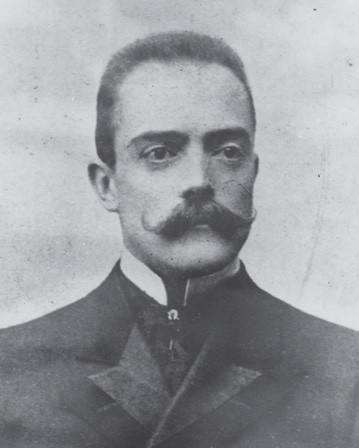
The Serbian terrorist who usurped the forests of Deçan
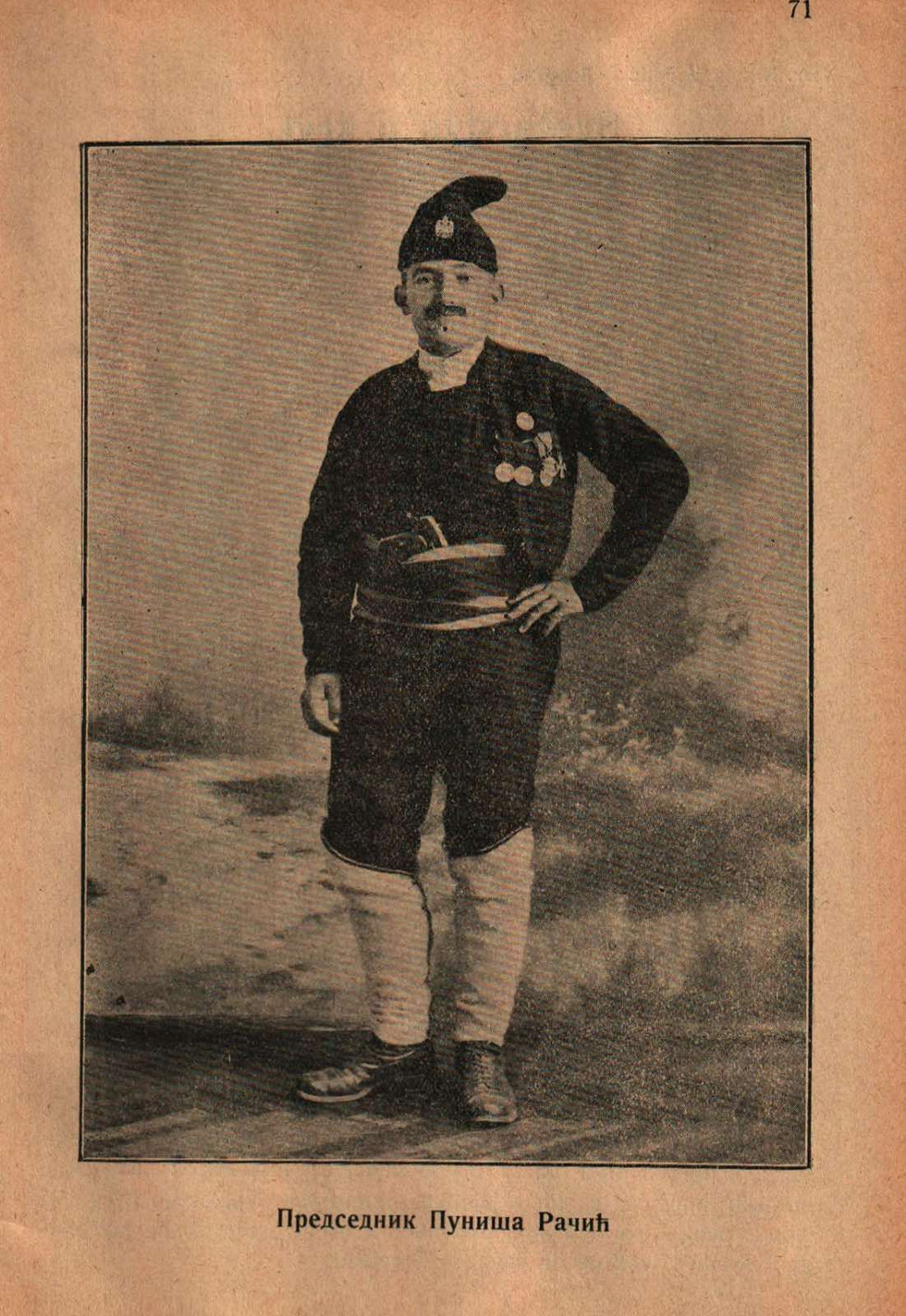
Not even to this day in the publications of the monastery of Deçan is there any mention of the affair of the Serbian terrorist who became a deputy of the Radical Party, Punisha Racic. In the early 20s, he was making a name for himself as a Karagozian, claiming through false genealogies that he was a descendant of the "holy king" of Dečani, and other times as a descendant of the fictional Stevo Vasojević, who was killed in the battle of Kosovo in 1389. These gave him the tax to ask for more than 3500 hectares of land and forests around the monastery of Deçan. With his closeness to Nikola Pashiqi, Raçiqi had put his hands on the forests of Deçan, appropriating them through dubious contracts and setting up sawmills there.
In the summer of 1924, according to the "Novosti" newspaper, a delegation had asked Pashiq to arrest Raciq because of the cutting of forests in Deçan. According to the press of the time, Pashiqi had threatened that if there were protests against Raciqi, the army would be sent. In the Court of Peja, the dispute was won by the Serbian nationalist MP, who continued with his business activities in cutting timber from the forests in Deçan around the monastery.
To expand the picture even more, in the period between the two world wars, the monastery of Dečani continuously expanded its properties. Thus, on August 27, 1927, the High Agrarian Directorate in Skopje gave the monastery the properties of 50 Albanian families of Isniq, which were expropriated without the right of appeal. By the capitulation of Yugoslavia in 1941, the monastery had become the owner of over 600 hectares of land (see Marlengen Verli, Albania and Kosovo: the story of an aspiration, 2007, p. 288).
 Battle for the Monastery
The corrupt origin of the dispute
In fact, the kaleidoscope of the property history of the Deçani monastery is much more complicated and hectic than that, but the above-mentioned cases prove a very simple thing. Accusations and counteraccusations about land often have dubious and ambiguous histories that come from the new realities after the invasion of Kosovo by Serbia at the end of 1912. At least from the 20s onwards, the monastery of Deçan did the usurpation of the land quite often with the help of of the local and central Yugoslav authorities, just as the Racic affair was in completely corrupt circumstances. The latter represents the clear case of the gangster empowered with power (all-powerful inspector) and with close ties in the royal and government circles who appropriated forest assets in Deçan, Mitrovica, Skopje and Ohrid. Even the cases when the peasant peasants on the sides of Deçan demanded, rightly or wrongly, to become owners of the lands which the monastery called their own, were repelled by the maneuvers of the so-called High Agrarian Directorate. There have been cases when the Serbian villagers of Dečani have been favored by the local and central government, even at the expense of the Montenegrin settlers: this is the case of MP Nedelko Simonović, who, through his intervention at the Ministry of Agrarian Reform in 1926, overturned the decision to settle 16 families Montenegrin in Deçan. Instead, the land designated for colonization was given to 17 local Serbs from the neighboring village of Lloqan (Marenglen Verli, Colonizing Argarian reform in Kosovo, 1992, p. 136).