


-
By:
Skender Latifi

- 12 May 2025 10:00
- Share to:
"Dragisa Stojadinović also traveled with me. He told me in confidence that he was going south to join a group of Chetniks, who were already operating in the field. He had two suitcases with him, full of ammunition. I put his suitcases with mine, so they were not subject to control at the Turkish customs. The suitcases were heavy, while the Albanians who carried them whispered that the 'consul bey' had put gold in them to later distribute to the people!", wrote the last Serbian consul in Pristina, Milan Gj. Milojević
“Serbia as a travel territory is a place of public interest only so long as it continues to be the center of attention as a disrupter of Balkan peace. Serbia is the tool of Russia, the enemy of Austria, the contempt of Bulgaria, and the hatred of Turkey. Indeed, her only true friend may be said to be her relative – Montenegro in miniature,” wrote Jeakel Brair in the book “The Lands of the Tamed Turk - Or the Balkan States of Today” published in 1910.
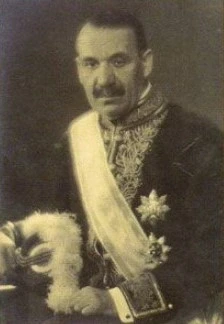
The above opinion can also be confirmed by the arrival and establishment of the last Serbian consul Milan Gj. Milojevic (1874 – 1969) in Pristina, in the autumn of 1911. Before being sent to Pristina, Milojevic had become known for the usurpations of Albanian properties in the Toplica region. Although Milojevic took office in January 1912, he arrived in the capital of Kosovo in November 1911. Regarding his journey to Pristina, he wrote: "Dragisa Stojadinović also traveled with me. He told me in confidence that he was going south to join a group of Chetniks, who were already operating in the field. He had two suitcases full of ammunition with him. I put his suitcases with mine, so they were not subject to inspection at the Turkish customs. The suitcases were heavy, while the Albanians who carried them whispered that the 'consul bey' had put gold in them to later distribute to the people! As far as I remember, the Chetnik Stojadinović had a passport, on which it was written that he was a miller. When we brought these suitcases to the consulate in Skopje, I felt happy that I had started my work in this way, that of 'courier service'. Before leaving for Pristina, I spoke several times with Prime Minister Milovanović. He warned me to convey Austrian propaganda in the best and most accurate way, but also "the mood and political movements among Albanians. Milan Rakiqi, whom I replaced, provided me with some very important data for the field work. When I arrived in Pristina, I found Ljubomir Neshiqi as the vice consul there. He had previously worked for a long time with Rakiqi and had already made considerable progress in his work."
Infiltration of priests and teachers
While one of the first reports that Consul Milojevic sent from Pristina concerned influential personalities of the Serbian minority in the Vilayet of Kosovo.
"We have had a considerable number of local priests and teachers who, with great skill and ability, have managed to keep the fighting spirit alive among the Serbs, but at the same time they have successfully managed to let the Albanians know that they are their sincere friends, that the Serbs are not alone and that Serbia and Montenegro are closer to the Serbs than Istanbul. Among these heroes, an example is Protopresbyter Angjellko Neshiqi from Mitrovica. He had strong ties with Albanians everywhere. As a man of authority in the church hierarchy and appreciated by the leaders of the eparchy, Protopresbyter Angjellko was also considered an important political figure among the Albanians. In addition, Angjellko maintained healthy contacts with the Russian consul in Mitrovica. All this has influenced the local government not to underestimate Protopresbyter Angjellko. He is one of the Serbian leaders in Kosovo, who demonstratively or very freely came to the consulate. His influence was such that it often happened that Albanians also asked for help from him. As a faithful guardian of the tradition and interest of his people in Lipjan, Protopresbyter Debelković was. Even in difficult times, Debelković courageously raised his voice in defense of the church and the flock of believers that he himself led... In Prishtina, there were authoritative church personalities. Protopresbyter Ariton Popović and Josif Popović stood out in particular. All these activists and public workers were spiritually connected to each other and worked on the basis of directives that they received directly from the high power structures of the diocese of Raška - Prizren. The seat of the diocese was in Prizren, but when necessary, the administration was carried out from Prishtina. All schools in the territory of the diocese remained under its administration. Meanwhile, in Prizren, the Theological Seminary functioned with great success and the teachers of this institution were often bearers of reliable missions. The rector of the Theological Seminary, Protopresbyter Steva Dimitrijević, as an excellent theologian, pedagogue but also as a national activist, did honor to the Serbian name... Later, young local intellectuals began to be involved in political life. Among them was Grigorije Božović, the son of the well-known protopresbyter and teacher Vukašin at the Theological Seminary of Prizren, then Milan Čemerkić, the correspondent of Russian newspapers from Prizren and others.
also Serbian consulates in Albanian lands, weapons and divisions in Pristina
Secret activities of the Serbian consulate in Pristina
Consul Milojevic writes: “Consular activity in the strict sense did not even exist. For almost a year of work in Pristina as consul, the consulate did not have the opportunity to issue a single visa for Serbia. This does not mean that the border was not crossed. On the contrary, as it was understood that major events were approaching, we increased our activities even more, primarily in establishing and strengthening the courier service, while we maintained direct contacts with the homeland through reliable local Serbs. One of these loyal people was Spasa from Čagallavica. In cooperation with several others, of course they were reliable people, Spasa carried the mail during the nights, passing through the Germia mountain, and then across the border the mail was handed over to our officers at the border. Among the most tangible memories I have of Kosovo is the crossing of the border by Vojvoda Vojislav Tankosić together with twenty selected Chetniks, with task to become as familiar with the terrain in Kosovo as possible in order to conduct combat operations. Preliminary preparations were made for his arrival in Kosovo. His escorts were arranged in groups of two or three people. Each group had at their disposal Serbian residents who were tasked with sending the Chetniks to certain areas. The Serbian consulate in Pristina established encrypted contacts with Tankosić... Lieutenant Popović, who was sent to Pristina as an aid on the eve of the First Balkan War, contributed a lot to the success of his mission. He was dedicated to his work. He eventually returned to Serbia, but as a connoisseur of the terrain from the formation of the first Chetnik units, he joined them and was among the first to cross the border. Then Božin Simić, who came to Pristina through the mountains of Gërmia in the summer of 1912 and who disguised himself by presenting himself as a buyer of millstones. After receiving the necessary information, he was sent to Sandzak via Mitrovica with the same purpose. A short time earlier, Dragutin Dimitrijevic - Apis (one of the main originators of the notorious organization "Black Hand") was engaged in Mitrovica. Bogdan Radenkovic provided Apis with a route through his brother Ognjen and trusted people. As far as I remember, during this trip, Apis also had two or three trained officers. Many other activities of a conspiratorial nature were also carried out, so when the Supreme Command began the actions, it was informed in detail about the state of the enemy army, its preparations, but also about the mood of the local population.
Pristina in the last days before the occupation
In the report, the Serbian consul wrote that "almost every day armed Albanians were seen moving around in Pristina."
also Let's not forget that Milosevic's Serbia carried out ethnic cleansing in Kosovo."Rallys were held every day in the mosques of Pristina, and even on the streets of Pristina, the beylers and hoxhallars gave fiery patriotic speeches. Our consulate was completely disconnected from the created reality, even telegraphic connections with Belgrade were cut off. However, we continued to inform the government and military circles about the situation and the factual situation on the ground. According to previous instructions, our trusted people from the areas around Kosovo, but also from a good part of Sandzak, came to Pristina and brought us information about the movement of the army. We conveyed this information almost every night through reliable people, through the mountains of Germia, to the officers of our army who were already constantly near the border. The closer our army got to the border or the more preparations continued, the more warlike the Albanians became. While we had already managed to create our own network of collaborators among the Turks of Pristina themselves! They secretly informed our commander, old Stojan, about the plans of the Turkish officers, and once they even brought us information that an attack on our consulate was being planned with the aim of killing the consul. I accepted this information calmly and gave instructions to the Gavazians to spread the news among Muslims but also to maintain the position that there would be no war and that the Turkish government would peacefully negotiate the existing problems. At the same time, I ordered the Gavaz people to buy a cartload of wood every day and have it sawn in front of our consulate all day. This was used as a disguise that there would be no war, as it was proven that the consul was providing the winter wood. On the other hand, my very stay in Pristina was a signal that there will be no war between the two countries! A serious situation arose when news spread that our consulate in Skopje was closed, and that our consul had left for Thessaloniki, while all traffic between Serbia and Turkey had long been interrupted. This information narrowed my scope, as there was talk in Pristina that the Serbian consulate in Bitola had also been closed, and then many other consulates of foreign countries along with it. However, I insisted that there would be no war and continued to maintain the network established on the ground with people who continuously carried information to the border. In those difficult moments, the Russian consul in Mitrovica, Llobachev, came to visit me. The news of his arrival in Pristina spread like wildfire, even to the surrounding villages. It was now clear that the war had only just begun. Lobachev had come to inform me that he had received a telegram from the Russian ambassador in Belgrade informing me that I had orders from my government to immediately leave Pristina. I must say that throughout my work in Pristina, I maintained constant contact with the Russian consul Llobachev in Mitrovica. He always gave me important information but was also willing to provide security and defend our compatriots. I left Pristina just a few days before our army entered it... "When I met Vojvoda Mišić for the first time after the war (I think in Skopje), he told me that he had been very pleased with the information that we had sent him through the mountains of Gërmia with our developed network of people," the last Serbian consul in the Vilayet of Kosovo wrote in his memoirs.
To be continued in the next issue of the Culture Supplement


