


-
By:
Rexhep Maloku

- February 6, 2022 19:50 AM
- Share to:
The coming week is decisive if the film "Woke" will be nominated for "Oscar". There is no dividing line between the reality in Krushë e Madhe and the one in the film. The stories of the women of this village, about which the whole world has already heard, are like that of Fahrije Hoti, from which the film is based. All of them are the Fahrijat of Kosovo and "Zgjoi" already belong to the world, with or without "Oscar"
There is life in the streets and shops of Krusha e Madhe even on a cold winter day in early February. In the center of the village, where all the roads connect, children come and go to school, while young parents drink coffee and fruit tea in the full cafe, on the main road that extends from the highway between Prizren and Gjakova. Everyone has an opinion about the trailer or the whole movie "Zgjoi" written and directed by Blerta Basholli, which unfolds the life of Fahrije Hoti from Krushia, whose husband was killed in the war, but who never surrendered to her daughter and son. . And immediately after the war, she would become an inspiration and motivation for more than 140 women of Krusha e Madhe. Serbian forces also killed their husbands. But the strong mothers also became heads of families for the 504 children of the village who grew up without fathers.
Anyone you ask in the village, there is a family member or female relative with a story similar to Fahrije's, whose role is played by the well-known actress, Yllka Gashi. Fahrije Hoti's success in business would also become a motive for other women in a patriarchal society.
"The film has ba boom"
"Na ajvar alla kena maru", Yllka Gashi addresses a merchant in the film.
"The film has boom", emphasizes Miradije Ramadani, another woman who, after the murder of her husband, Osman Ramadani, alone raised six daughters and one son. Dija, as her daughters and son call her, is another successful entrepreneur from Krusha e Madhe. The business "Vigani Foods", which exports pickles and ajvar to Western Europe, was raised from ashes with the help of children.
also The real women from the multi-award winning film "Wake Up"
"Wake Up", which won three major awards at the Sundance Film Festival and is in the running for an Oscar nomination for Best International Film, doesn't just represent Hoti's story.
"Man is stronger than stone", emphasizes Fahrije Hotin in one of the promos of the film for international festivals.
All widows have similar stories of survival. Krusha e Madhe is still waiting for the return of the remains of 64 missing persons. "Ukshin Hoti 1943 - ...?" - writes on the image placed in the center of the village. Nothing is known yet about the fate of the intellectual Ukshin Hoti, who was last seen alive in the spring of 1999 in Dubrava prison.
Miradije Ramadani was in the Gjakova hospital with her seven-month-old son, Mentor, at the end of March 1999 when the NATO bombings began. Serbian forces would retaliate against the civilian population in Krushë e Madhe.
"Djalin lulak ma majke n rifle"
Ramadani returned in April to Kruša e Madhe, where she would see corpses along the roads and meadows with her own eyes. He would not find out anything about the husband and the six daughters. She would return to Gjakova to the family of a friend of her husband. After three weeks, the citizens of Gjakova would be deported on foot towards the border with Albania at Qafa t Prushi.
"I've seen it when they have their own mother: 'What's in the bag?' 'Pasul', he was told. You had to hide the baby in the backyard. He also took his knees more fervently. He said: 'Pasul with meat, you have a hangar,'" recalls the woman painted in oil. Even he himself would face the threat of the Serbian police to kill his son.
"They kept us at the border until 12 at night. I also remember that these (Mentor, vj) Serbs kept me for two hours... two hours at gunpoint before they went to the border", emphasizes Ramadani, turning his gaze towards his son Mentor, who was then only seven months old. He waved his right hand up to demonstrate how the baby was fluttering in the barrel of the machine gun.
The girls would be reunited with their mother and brother only after a few weeks in Albania. They knew nothing about the father.
Even Ramadan proved to be rock solid, no matter why when he returned from Albania, apart from not finding the remains of the head of the family, he didn't even have a shelter over his head.
"I love life with life", emphasizes Fahrije Hoti in the promotional video of "Zgjoi".
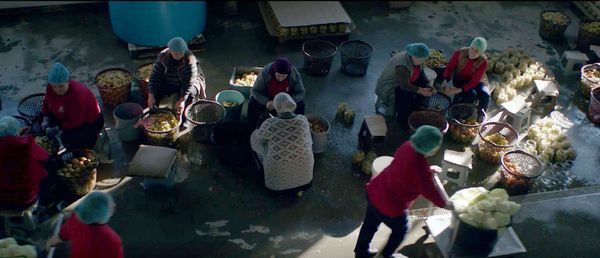
"Nana, pillar of the family"
Both Fahrija and Miradija gathered their strength and children around them. For years she worked in Fahrije Hoti's shop in the village, where she was once allowed to sell her pickles.
The widowed mother led the children to work day and night so that none of them would leave the university education due to the conditions in a country that was struggling to recover itself without institutionally extending a helping hand to the families of war victims.
"There were difficulties, but still we succeeded. We worked with the help of my mother and sisters. In the morning at school, in the afternoon in the field, we worked. We had our mother's support, because she was the main pillar that dealt with us", emphasizes Edita Krasniqi, Miradija's daughter who works as an Albanian language teacher in Hoçë te Vogël.
The film with the main protagonist Yllka Gashi in the role of Fahrija also has moments of jokes between the women, who suddenly fell on their shoulders the burden of providing food for the five hundred children of Krusha e Madhe. In the film, the women, while cooking the ajvar, also share moments from the groom's entrance on the wedding night, describing each other's reactions.
"Besides, we are very strong", emphasizes the actress Kumrije Hoxha, who plays Naza.
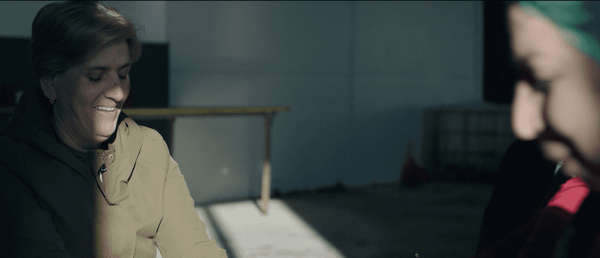
Contradictory sequence
But in the film where Çun Lajçi plays the role of Fahrija's father-in-law, the patriarchal force of custom also stands out, which recognizes women's commitment only within the four walls, even when the house is left without men. At one point, someone with a rock breaks her car window while the mother of two struggles to make ends meet.
Some Krushians asked behind the camera of the KOHA group team disagreed with the inclusion of this part, but refused to speak publicly. But Edita Krasniqi has spoken.
"I mean, I didn't like the harassment of Krusha's men, I myself worked until two in the morning, went to the fields and ran the tractor, but we don't have any harassment", Krasniqi emphasizes. "But maybe it happened to Fahrija".
Fahrije Hoti, years after the premiere of "Zgjoi" in Pristina, has defended every sequence of the film, saying that it represents her life to the fullest.
also "Wake up" invades the USA a week before the nominations for "Oscar"
"It happened to other women, so the film is completely dedicated to the widows of Kosovo," she said.
Miradije Ramadani, with whom he has worked for ten years, has joined Hoti. "Bum ka ba qeke film so let the whole world know", emphasizes Ramadani. "The film is welcome for us."
Hamdi Gashi, an official in the local community of officials in Krushë e Madhe, admits that widows continue to be prejudiced. It has shown how the Krushians have constantly faced challenges for the survival of families without men. But he calls for the state and society to mobilize so that Kosovo can document the truth about its struggle through art.
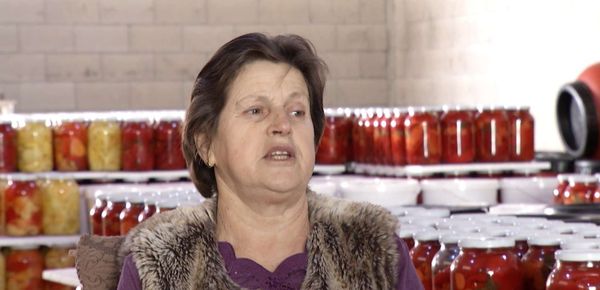
Call for the leadership of Kosovo
"The film was very important, both local and foreign audiences saw that Serbia really committed genocide in Krushë i Madhe and in the whole of Kosovo", he emphasizes, adding that the state should have a special budget for documenting the biggest Serbian crimes in Kosovo so that the world knows the true story of the last war.
Destan Ramadani, 31 years old, has a similar appeal, who still remembers the horrors of the end of March 1999 when the Serbs committed one of the biggest massacres in Krushë.
"We as a people have lost a lot, but these our governors have not done much to support us, to help the families that have disappeared and the village that has been burned, most of them have almost nothing", he emphasizes, adding that Serbia is investing in propaganda campaigns to spread the truth about the last war through cinematography.
"We need to work more. The government should do more with books, with films that show the whole truth of Krusha and the whole of Kosovo, which shows the truth of what has been done here."
Kosovo still knows nothing about the fate of its 1642 citizens, that Milosevic's Serbia threw itself into the hills with and to hide the crimes, while Vučić's today, the temporary return of the remains is conditioned by compromises in the dialogue that everywhere the end is not in sight.
"Woke up" also includes the protests of mothers and wives of missing persons in front of central institutions. But the calls of mothers and women have not been heard strongly even by the leadership of Kosovo.
Mother Knowledge, as the children call her, is still unable to convince Mentor that the returned remains were his father's. "You don't go to the grave and say: 'My father is not there, what happened to me?'"
"He didn't agree with me because he didn't see the face of the one who is there, he didn't," says Mentori.
"We have many cases like this, but when they were left without a parent who didn't know them, how cool are they...", says mother Dija, making two fists. "I don't know what they told me, but the people who know him, they are hard-nosed and beg every time, he doesn't take anything from him."
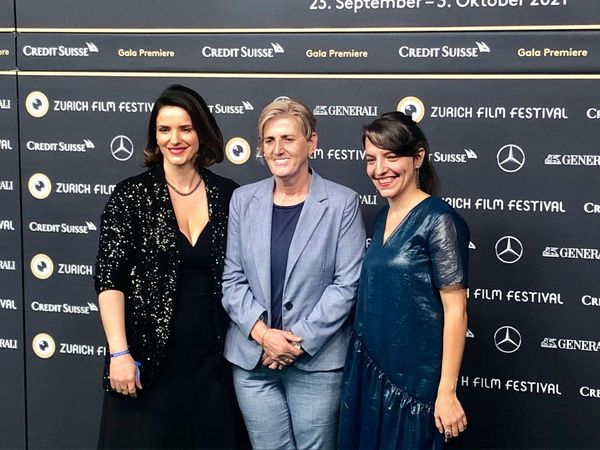
America of hope of Albanians
Fahrija and Dija are just two of the hundreds of women who were left without husbands by the war, but they did not devote themselves to work day and night, becoming employers for the other Kurshians with whom they share the same fate.
Dija already exports ajvar and pickles to Germany.
Basholli heard about Hoti's story in the news a few years ago, when she was finishing her master's degree at New York University. He knew that a film should be made and that Yllka Gashi, the well-known actress in Kosovo, should be the star. Basholli and Gashi had met Hoti around 2011 and this strengthened their mission to tell her story.
Now Yllka Gashi in the United States and Blerta Basholli in Kosovo are feverishly waiting until the names of the films nominated for the best foreign film for the "Oscar" award, the most gilded in world cinematography, are announced.
From the United States, Albanians have historically expected announcements and big announcements on Kosovo's path to freedom and independence.
But regardless of whether "Zgjoi" will be crowned with the top American award, Basholli and Hoti have already won their heart awards.
"Playing this extraordinary character in the film was a dream come true", said the protagonist Gashi in one of the film's promos. She said that as a teenager during the war, she understood very well her pain and sacrifices.
also "Los Angeles Times": Widowed and downtrodden, the women of "Awoke" to brave independence
"The sense of community, the community of women, who, despite initially being reluctant to join (Fahrije in her venture, vj) at the moment joined and built the future together, and succeeded", emphasizes Basholli, adding that it is it is a pleasure to see all the smiling women working in the agricultural cooperative "Krusha", under the leadership of Fahrije Hoti, with whose words the promotional shoot of "Zgjoi" closes in the competition for the golden reward.
"...and this is a miracle of God that we have women ourselves."

