


-
By:
Skender Latifi

- July 28, 2024 15:00
- Share to:
One of the infamous personalities with a key role in the implementation of the Rankovician policy in Kosovo and in the Albanian villages in the former Yugoslavia, Vojin Lukić (1919 - 1997) has finally revealed details from the "Arms Collection Action" in Kosovo and from the very beginning we can say that he has shed light on many unknown events, but which at the same time are part of the manifestation of anti-Albanianization and the justification of the state policy, which was exercised in Kosovo between 1956 and 1966. "In short, the Kosovars were unwilling to hand over their weapons ", he testified
Crimes in retrospect, the return of the narrative to the memory of the originators of the hegemonic policy
In addition to the economic crisis that engulfed the society of the Socialist Federal Republic of Yugoslavia from the mid-eighties of the 20th century, one of the documents that would push the former state towards the abyss and which until this time was taken as a good example in the world, will be "Memorandum of the Serbian Academy of Sciences and Arts".
"From the end of the spring of 1986, we asked academician Pavle Iviq (1924 - 1999) to edit and harmonize the final text of the 'Memorandum of the Serbian Academy of Sciences and Arts'", academician Mihaljo Markovic (1923 - 2010) testified. . While the final version of the "Memorandum" after the two meetings of the Council for the Preparation of the Memorandum on September 19 and 23, 1986 had already been completed, just one day later someone had betrayed the Serbian academics, because on September 24 the text was published in a Belgrade daily with the title "The road of hopelessness" and thus for the first time in the public opinion without the 'desire' of the compilers, the information about the draft of the Memorandum flowed...!"
"I never found out how it happened that the text appeared in the opinion. Since the author of the attack was the journalist and son-in-law of the academic Jovan Gjorgjevic, the deep conviction remained that he had simply stolen the text from his father-in-law, even though Gjorgjevic had not dealt with this issue, but in the end he had received the final version from the Preparatory Council with in order to do his examination", Academician Markovic, a doyen of Slobodan Milosevic's Socialist Party, explained desperately. However, even to this day, among critical circles of nationalist politics in Belgrade, there is a belief that the publication of information about the Memorandum was precisely devised by its authors, simply for the purpose of testing the broad opinion in Serbia!
But on the other hand, such projects had given courage to Serbian nationalists in that world, but also later, therefore they had calculated that finally it was time to reappear their aggressiveness in the largest possible proportions, in relation to Kosovo and the Albanians and some nationalists and chauvinists, during Tito's lifetime, they had not had the courage to present themselves in the spirit and intensity of the present.
also Koci: Serbian students' memorandum on Kosovo a copy of the one from 1986
In the course of such appearances, one of the infamous personalities with a key role in the implementation of the Rankovician policy in Kosovo and in the Albanian villages in the former Yugoslavia, Vojin Lukiq (1919 - 1997), has finally revealed details from the "Arms Collection Action" in Kosovo and from the very beginning we can say that he has shed light on many unknown events but which at the same time are part of the manifestation of anti-Albanianization and the justification of the state policy, which was exercised in Kosovo in the years 1956 - 1966. In the following we will present fragments from Vojin Llukić's book "Plenum of Brijuni - settling accounts with Aleksandar Ranković" published in 1990 and his testimony as we mentioned earlier reached thanks to the new pre-Milloshevician nationalist winds that swept Serbia from the time of the death of the former leader -Yugoslavia, Josip Broz Tito in 1980.
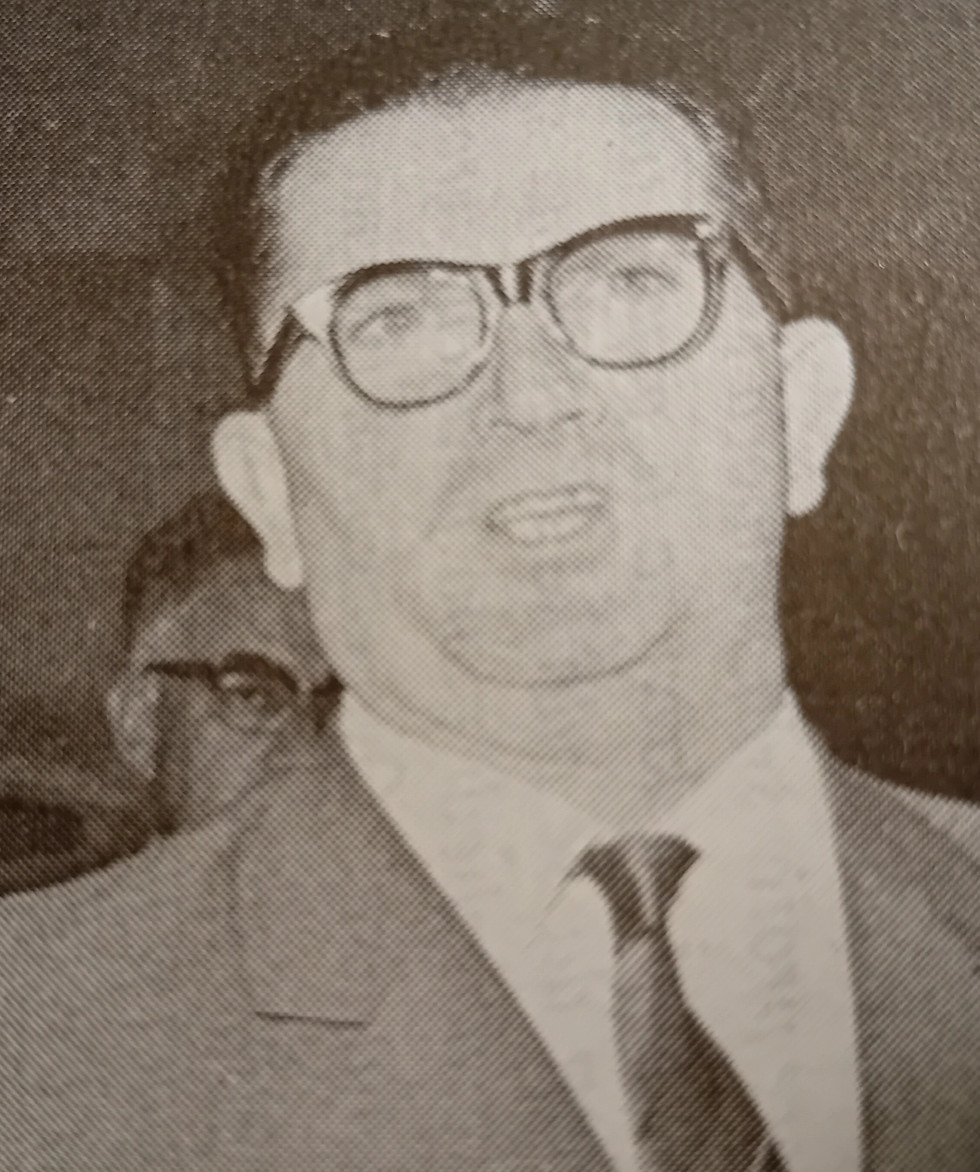
Testimony of the state secretary for Internal Affairs about the action in Kosovo
So, as we mentioned above, one of the people in Aleksandar Ranković's close circle in the "Arms Collection Action" was Vojin Llukić, who in the years 1953-1962 served as the State Secretary of Internal Affairs of the People's Republic of Serbia, while in the years 1963 - 1965, Llukić was also secretary, but now of the federal government. Initially, he remembers the time when responsibility began to be demanded regarding the consequences of the "Arms Collection Action" in Kosovo.
"The Executive Committee of the KQ LK of Yugoslavia sent a letter to the KQ of Serbia, right after the Brijuni Plenum on July 8, 1966. Among other things, the Executive Committee recommended the Municipal Committees to make an in-depth analysis of the political situation in their territories and by the end of the month, each committee had to submit its reports to the Central Committee of the LK of Serbia. This is how the Commission of the Executive Committee of the Central Committee of the LK of Serbia was formed. In the meeting held on August 13 - 15, the formed commission examined the report of the Executive Committee of the Central Committee of the LK of Serbia related to the activity of the Internal Affairs Service, but in the end it was concluded that some issues in the report were not sufficiently illuminated ". It should be noted that the former Federal Secretary of the Interior, Llukić, although he does not say it bluntly, expresses his greatest impatience about the long silence of his former boss Aleksandar Ranković and his non-appearance in the public eye at least immediately after the death of Tito . Llukić further wrote that "the basis for examining the activities of the LK of Serbia in the implementation of the decisions of the Fourth Plenum of the LK of Yugoslavia (the Brijuni Plenum) were the materials that had been processed in the Central Committee, but that in reality those materials were based on the analyzes of local, district, city, but also Provincial Committees and the direct follow-up of these activities by the Executive Committee of the Central Committee of the LK of Serbia". Llukić further stated:
"At the meeting of September 2, 1966, it was requested that the Provincial Committee of Kosovo prepare a report on the problems that the Executive Committee will examine. In reality, the holding of the Sixth Plenum of the KC of the LK of Serbia was a continuation of the Fourth Plenum, that's why the accusations about the crimes in Kosovo, behind which stood Ranković and his nationalist and chauvinist group" other details of the report where it was said "that the current political problems in the Autonomous Region of Kosovo and Dukagjin" are a consequence of the abuses of the Internal Affairs Bodies that occurred in the years 1956 - 1960. These recommendations, the Executive Committee of the CQ of the LK of Serbia made public on September 2, 1966, on the day when the secretary of the Provincial Committee, Veli Deva, provided the first and concrete information about the abuses of the Internal Affairs Bodies in Kosovo. Therefore, relying on Veli Deva's report, the Executive Committee prepared the material for the Sixth Plenum of the Central Committee of the LK of Serbia, which was scheduled to be held on September 14. Although Vojin Llukić testified about his appearance before the Commission of the Executive Committee of the Central Committee of the LK of Serbia, where he was asked about the cases of murders in Kosovo prisons, as well as about the problems of the Internal Service in Kosovo, however, according to him, the accusations for genocide against Albanians in the "Weapons Collection Action" as well as for nationalist and chauvinistic attitude (meaning Ranković, Llukić and Svetsilav Stefanović that we will talk about below) appeared only in the Sixth Plenum of the Central Committee of the LK of Serbia, let it be understood that in the Plenum of Brione, the issue of Kosovo, the murders, deportations, beatings of Albanians were not mentioned, at least not publicly.
"I directed and coordinated the action of collecting weapons in Kosovo"
also "All Kosovars are potential spies of Albania"
"The commission has invited me to investigations several times and asked me about Kosovo, about the prisons in Kosovo and about the cases of deaths in them. The commission asked me how it came to those cases. I presented two cases of deaths in Kosovo prisons, one in Peja and one in Prizren, but I pointed out to the representatives of the Commission that the situation in Kosovo prisons is much worse than in other parts of Serbia, that in Kosovo the number of of (Albanian) prisoners was large and the prisons there are always overcrowded with prisoners", explained Llukic, but he has tried at all costs that for all murders, imprisonments, or as it has been heard, accusations of genocide in the Commission of To the Executive Committee of the Central Committee of the LK of Serbia, to blame the senior leaders of the state. In addition to noting that the following account is not complete due to the preservation of state secrets, the former federal secretary of the Interior further wrote that he "personally supervised, guided and coordinated the 'Arms Collection Action' in Kosovo!
"In short, the Kosovars were unwilling to hand over their weapons"
"The broad action of collecting weapons in Kosovo and in the neighboring districts (meaning the province of the Preševo Valley, but also the Albanian border areas of North Macedonia) started at the end of 1955 and at the beginning of 1956, but the illegal arming from the state side was confiscated even earlier. After the approval of the Law on Weapons in Serbia in 1954, it was tried to legalize weapons, but this action did not give results in Kosovo and on the contrary, there were actions of disarmament, in which case some Albanian houses were raided, however, the resistance of the Albanians it was big, that's why there were emigrations from Kosovo to Albania. In short, the Kosovars were unwilling to hand over their weapons", he concluded.
While, looking at the international level, it should be remembered that in those years, Tito's opposition to the head of Moscow, Stalin, and the events surrounding the Resolution of the Informburo were very relevant, since from the point of view of Western political factors, they were seen as targeted actions of Titos, the fact is surprising why the then leadership of Serbia, but also its representatives who were at the head of the federal institutions, exactly start to implement plans and implement wild typical Stalinist policies in relation to Kosovo and the Albanians!
Peja as an experiment
"After 1955, after the normalization of relations with the USSR and with all socialist countries, the pressure from the countries of the East ceased and this even influenced the improvement of the situation in Kosovo" - wrote Llukić, clarifying the genesis of the initiative to launch shares in Kosovo.
"The Secretariat of Internal Affairs in Kosovo approved the "Action for the collection of weapons", but it had been a while since the action had started spontaneously in the Peja District. The permission to start the action was given by Aleksandar Rankoviqi himself, since then he was the vice-president of the federal government and the president of the Council for Internal Policy. But, Llukic is not satisfied with that and has returned to the first cases of the beginning of the action in Peja.
 UDB, mistreatment of Albanians and violence against women in the militia
"The collection of weapons in Kosovo was somehow imposed by itself, initially in the Peja District, as several people were imprisoned there and according to the data of the Internal Affairs bodies, they were members of an illegal organization. Weapons were also found with these people. Then a village in Peja was raided, while the action lasted 20-30 days and was an "experimental action" that took place in the entire province of Peja, but at the same time permission was requested to expand the action to the entire province of Kosovo", the testimony continued. Lluqiq speaking next about the methods that were implemented during the action!
To be continued in the next issue of the Culture Supplement

