


-
By:
Muhammad Mufaku

- 23 October 2022 10:15
- Share to:
Besides its beauty, the Sinan Pasha Mosque in Prizren is also distinguished by the fact that it was saved from total destruction by the Serbian government. The District Court of Prizren issued a decision for its destruction, allegedly because it was the property of the Serbian Church. With the decision of December 2, 1940, he left the Mosque at the disposal of the Church, which in order to destroy the legend that it was built with the stones of the Archangel Monastery. It was the circumstances of the time that saved him. A story like this brings to light another affair: the lack of protection from the injured party
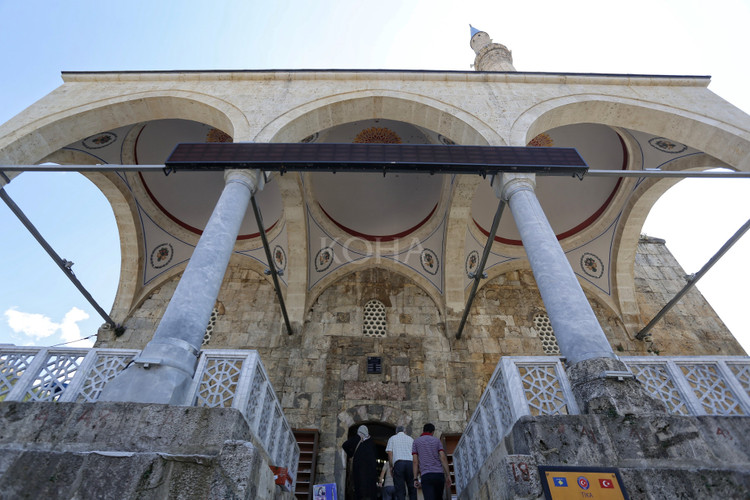
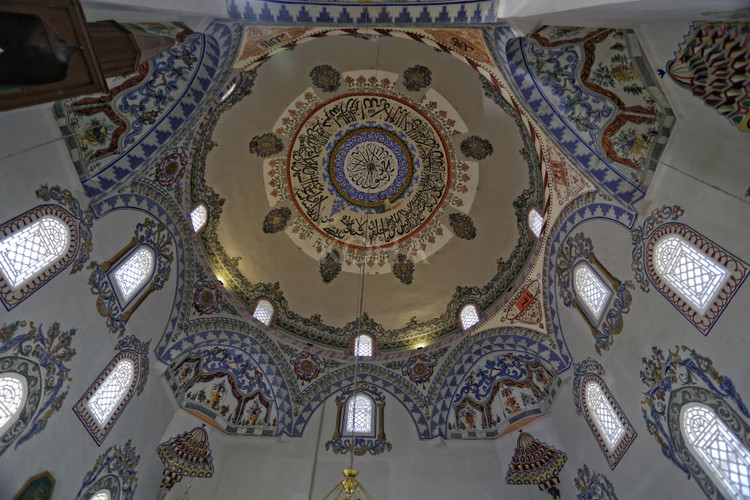
The mosque of Sofi Sinan Pasha in Prizren, built in 1615, is the pearl of the city that makes it more and more attractive to foreign tourists. Although we have other mosques with historical value in Kosovo, such as in Pristina, Pejë and Gjakovë, the Sinan Pasha Mosque has reason to be considered as one of the most beautiful mosques in the Albanian countries, either from the outside, or from the interior with paintings with motifs floral.
Claims that it is the property of the Serbian Church
However, the Mosque of Sinan Pasha is also distinguished by the fact that it was saved from total destruction by the Serbian government at the very time when the Mosque of Burmalia or "the beauty of Skopje" on the edge of Vardar was destroyed in 1924. Thus, the Mosque of Sinan Pasha remained damaged and under the risk of total destruction until the end of 1940, when the District Court of Prizren issued a decision for its destruction allegedly because it was the property of the Serbian Church. For this very reason, the Mosque of Sinan Pasha remained a miracle not only as an object of historical and artistic value, but also how it was saved from total destruction until 1941, despite the court decision for its destruction.
The legend about the Mosque with the stones of the Archangel Monastery
Sofi Sinan Pasha, from Vila e Albania, which then belonged to the Sanjak of Prizren, had chosen a good place for the construction of the Mosque by also using stones from the Monastery of the Holy Archangel near Prizren, which was in ruins since the 1615th century, so almost a century before the construction of the Mosque in 1972. However, with the new Serbian nationalist impulse, a legend was created in time that describes how Sinan Pasha got the Sultan's permission to destroy the Monastery in order to build his own mosque with his stones. This legend was debunked in time by Hasan Kaleshi in some early writings and in his book published in Pristina in 1918 entitled "Oldest Waqf Documents in Arabic in Yugoslavia". However, this legend was exploited by the Serbian government in the old Yugoslavia (1941-XNUMX) to destroy the Sinan Pasha Mosque, allegedly as the property of the Serbian Orthodox Church, since it was built with the demolition of the said monastery.
also Prizren in 1924, the target of the Serbian invasion and the prison life of mufti Rrystem Shporta
What is the truth, the Mosque of Sinan Pasha remained at the mercy of the new government since 1912, first Serbian (1912-1915) and then Bulgarian (1915-1918). During that time, the Mosque was confiscated and turned into a military warehouse, namely as an ammunition warehouse. With the end of the First World War and the establishment of the Kingdom of Serbs, Croats and Slovenes, Serbian euphoria against Muslims in Kosovo, Macedonia and Bosnia appeared, despite the fact that the new state signed the Treaty of Saint Germain in Paris in 1919 for the protection of minorities. In the framework of that aggressive nationalist euphoria, many Muslims were killed and many monuments of historical value were damaged, despite the protests of the head of the Islamic Community that was formed then.
The euphoria of Serbian nationalism and the start of destruction in 1922
In the framework of this campaign in 1922, the new Serbian government started to destroy the Mosque of Sinan Pasha, starting with the porch, which provoked the protest of the people in Prizren and forced the government to stop the action of destruction temporarily. Right at that time, the new government destroyed the Burmalia Mosque in Skopje in 1924 in the middle of the day to build the "Army House" in its place.
After the reformation of the state, which received a new name (Kingdom of Yugoslavia), in 1929, the new Islamic community was created at the state level, which received more guarantees for Muslims and their status. Within this community, two equal councils (councils) were formed, one with headquarters in Sarajevo and one with headquarters in Skopje, covering Macedonia and Kosovo. However, the Serbian government was not satisfied with the appearance of Albanians on the scene in Kosovo and Macedonia under the umbrella of this organization under the leadership of Ferhat Draga. With the contribution of Ferhat Draga, it was achieved that the new Constitution of the Islamic Community in 1930 guaranteed autonomy for Muslims and the right to manage their properties, including mosques.
However, this appearance of the Albanians led by Ferhat Draga angered the Serbian government and pushed the Minister of Justice, L. Markovic, in May 1940 to suspend all the legitimate bodies of the Islamic Religious Community in Skopje and appoint a the state commissariat with pro-Serb elements that would serve the government's plan to eliminate the influence of the Albanian factor in the institution (BIJ) that aims to protect Muslim properties and manage them.
Return of the request for destruction by the Serbian Orthodox Church
also Saint Premta Church in Prizren, universal cultural heritage of Kosovo
In these conditions, the Serbian Orthodox Church again raised the request for the destruction of the Sinan Pasha Mosque and its handover to the Church based on the legend that Sinan Pasha had allegedly destroyed the Monastery of the Holy Archangel to build the Mosque with his stones. These details remained unknown, they were not even mentioned in Kalesh's well-known book, until the historian Qerim Lita revealed them in a press release for an international conference in Tirana, which was published in 2021.
Thus, after examining the request of the Serbian Orthodox Church, the District Court in Prizren issued on December 2, 1940 the decision by which it left the Sinan Pasha Mosque at the disposal of the Church. In the justification of the decision, it is stated that the Mosque "which was built on this plot of land constitutes the property of the plaintiff, because it was built... with the material of the ruined Monastery in Saint Archangel built by Tsar Dushani, which monastery was destroyed through terror and violence, while the material was taken to Prizren and the Mosque was built from this material...".
In this decision, the influence of the ideology, namely the anti-Albanian policy, which was based on the Serbian legend mentioned above, can be clearly seen. But here comes another issue: the lack of protection of the injured party! In other words, here comes the motive for the suspension of the legitimate bodies of the Islamic Community for Macedonia and Kosovo and the establishment of the Commissariat in May 1940, because the new body appointed by the government did not appear in court at all to protect its property .
This lack prompted the chairman, Reis-ul-ulema of the Islamic Community in Sarajevo, to address the Minister of Justice on December 24, 1940, saying "in the Prizren District Court for the Sinan Pasha Mosque there, for which the Commissariat has not sent its defense representative, for which the decision was brought that the Mosque was given to the Church". Understandably, this was a protest that unmasked the purpose of suspending the legitimate bodies of the Islamic Community to allow the Serbian Orthodox Church to file a lawsuit for the destruction of the Mosque and the return of the land to its property without the presence of the injured party!
Destruction as a matter of days for the Church and annulment of the decision
With this arbitrary decision that legalized the Serbian legend and returned the Mosque to the property of the Serbian Orthodox Church, the destruction of the Mosque remained a matter of days for the Church. In these circumstances, time saved the Mosque, namely the destruction of the Kingdom of Yugoslavia as a result of the Axis invasion on April 6, 1941, which created ethnic Albania (1941-1944). Right in Prizren, where the Second League of Prizren was formed in September 1943, under the dictates of the new government, the decision was made in July 1945 that Kosovo "by the will of its population joined federal Serbia within the Yugoslav Federation".
also Banjska from village to town and vice versa
In this new situation, which was characterized by the rapprochement with Albania until 1948, the new communist government in Kosovo issued the decision to take the Mosque under the protection of the state, which de facto canceled the decision of the District Court of Prizren on 2 December 1940. However, it was only in 1952 that the internal conservation of the Mosque began and, with great delay, it was opened in 1968 as a museum for oriental manuscripts, and at the request of the head of the Islamic Community in Sarajevo, it was returned to the possession and maintenance of the Community in 1969 Islam in Prizren by court decision. However, the Mosque needed many years of renovations until it was opened to the faithful in 2007, and in 2013-2015, the yard renovation works were carried out with the help of the Turkish agency (TIKA), which turned the Mosque into an attraction for tourists from around the world.
