


-
By:
Arsim Magjera

- February 19, 2025 10:00 AM
- Share to:
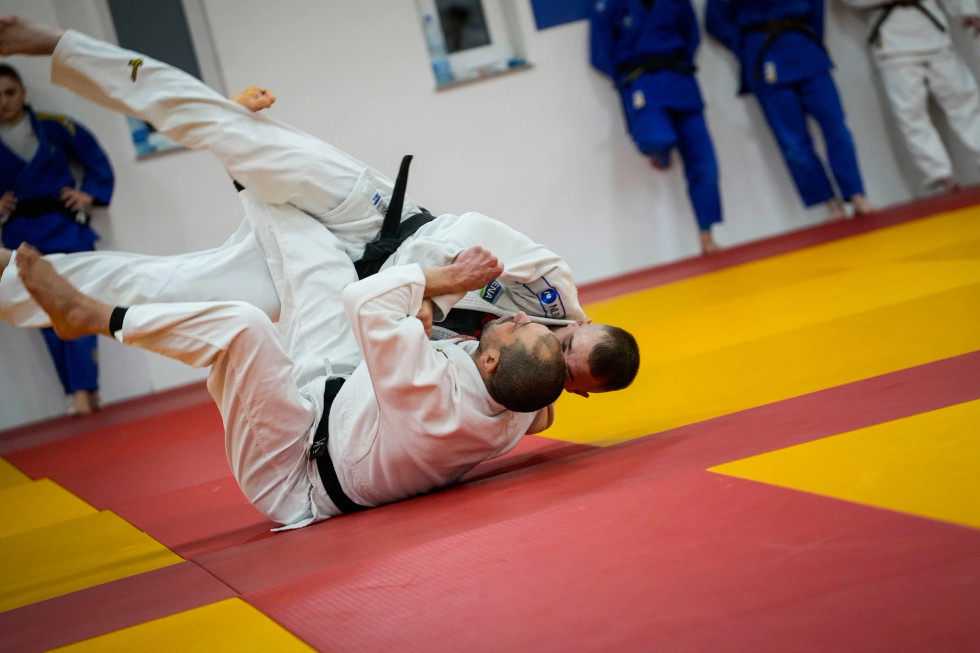
Demonstrates to judokas, carefully follows their movements and makes necessary corrections. Consults with master Driton Kuka and continues with demonstrations, observations and corrections. Moves from one side to the other of the hall at the National Judo Center in Peja.
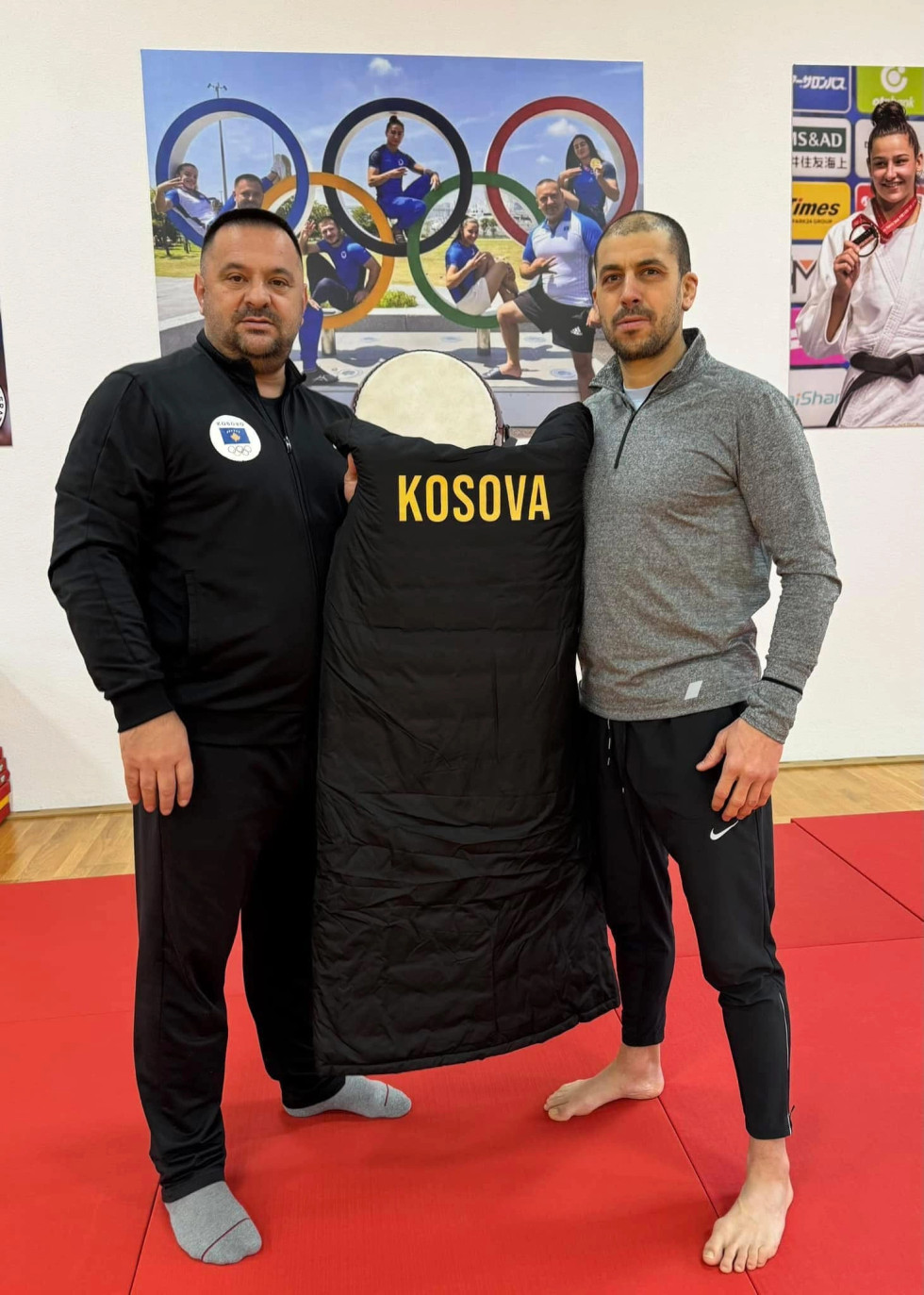
The 44-year-old Brazilian, Pedro Guedes, has started working furiously in the Kosovo judo team. He is one of the assistants of the Kosovo head coach, Driton Kuka. He settled in Peja ten days ago, while his engagement was made possible thanks to the program of the Government of Kosovo, Supersportists, which aims to further raise the level in individual sports.
Guedes is a proven coach, at the peak of his career, and his conduct in Kosovo was not easy. As a judoka, he has two Brazilian titles, a Pan-American title with the Brazilian team, and has also won medals in major competitions, including the Tokyo Grand Slam. As part of the Brazilian team, he was world runner-up.
As a coach, he had his first international experience in Slovenia. He was an assistant to the national coach for two years. Then he worked for five years in Canada, where he was the national coach. Among other things, he raised one of the best Canadian judokas, Jessica Klimkait.
In 2017, he started working in Germany. He was initially the coach of Germany's U21 team. After the Tokyo Olympics in 2021, he was the head coach of the German national judo team until the end of 2024. He is the first non-German to coach the German Olympic team in judo.
also Nora draws on the "Kosovo judo system" while working with the Belgium team
Guedes has now put his experience at the disposal of Kosovo. Kosovo has a very developed judo scene, and Guedes strongly believes that it will contribute to further growth.
Guedes, who is involved in various social programs during his stay in Brazil, gave an interview to KOHA after starting work in Kosovo.
KOHA: What are your first impressions after starting work in Kosovo?
Pedro Guedes: First impressions are that judo in Kosovo is well developed. There are competent people involved in all departments and a clear long-term vision for the further development of judo.
What characterizes judo in Kosovo compared to other countries?
Guedes: It has a lot to do with work ethic, discipline and the ability to overcome obstacles. There is a desire to win and to represent Kosovo in the best way possible.
What do you think is the secret to the success of Kosovar judo?
Guedes: The dedication and work ethic of the coaches, athletes and everyone else involved in the system.
Have you changed your opinion about Kosovo judo after starting work here?
also With five medals, Kosovo judo maintains superior standard
Guedes: My opinion hasn't changed. But I finally have a better overview of the judo system in Kosovo and a broader view of how everything works here.
In terms of sports, what is the motivation for working in Kosovo?
Guedes: I always challenge myself to new beginnings. After five years in Canada and eight years in Germany, where I was the head coach of the men's national team, I consider this job interesting and also a new motivation for my career. Working alongside a very successful coach like Toni Kuka also motivates me to accept the invitation and support the Kosovo team.
What are your plans and goals in Kosovo?
Guedes: The main commitment is to assist Tony in his long-term plan, to improve the level of the current top judokas and to develop the new generation of Kosovo athletes. The main goal is to continue to improve and have constant performances at the international level. Another important thing is to raise the level of the men's team.
From Germany to Kosovo. Did you have any doubts about accepting the offer?
Guedes: I had no doubts, but I had to think about this decision for a long time, as I had an invitation for a project from another country who also has a very developed judo. But in the end, working with Toni and supporting the Kosovo team was crucial in making the decision to come to Kosovo.
You have worked in Slovenia, Canada and Germany. What is the image of Kosovar judo in the world?
Guedes: It is an image of a young, serious and very successful team, with a strong work ethic, led by people who love judo and who want to represent Kosovo in the best possible way.
also Majlinda, also sought after as a coach, rejects a big offer from the United Arab Emirates
What should other sports in Kosovo learn from judo?
Guedes: Again, I believe that work ethic is the key point, as well as the seriousness and dedication of everyone involved in the judo system. It is also important to emphasize the meaning of high performance in sports, which is of great importance for the development of athletes and consequently in performing at an international level.

