


-
By:
Shaban Maxharraj

- June 24, 2026 08:00
- Share to:
Maestro Hazir Reka has reopened the archive of his photographs that marked an era. “Dalja n'dritë” returns through the camera to the horizons of the Trepça Mine, to revive a unique chapter that encompasses major events of 1988 and 1989 that shook the former Yugoslavia. The strike mobilized Albanians, aroused solidarity and showed the Serbian regime that it can also face resistance. All of this and much more can be read in Reka's photographs
The Trepça Miners' Strike of 1989 is a kind of dividing line for many researchers. Many are those who come to the conclusion that the collapse of the former Yugoslavia began precisely in Kosovo, and that about 850 meters below the surface of the earth, in the horizons of the Trepça Mine in Stantërg.
The story of those eight days in February is never complete. Each story of about one thousand and thirty miners is a story in itself. Beyond the symbolism, the strike had many effects. It mobilized Albanians, aroused solidarity and showed the Serbian regime that it can also face resistance. All of this and much more can be read in Hazir Reka's photographs.
Accompanied by journalists Blerim Shala and Halil Matoshi, Reka would go down to the miners to recount what he saw through his lens as a photojournalist. Some of those photographs today look like exhibits. And they are. They reveal the days when the history of Kosovo and the entire former Yugoslavia was changing. Reka's shots, at the time for "Zërin i Rinisë", show a display of dissatisfaction and resistance of the mine workers. They bring together portraits that can now be seen as the main actors of a collective drama that once demanded their rights. The images depict the miners in the demonstrations of 1988 and the strike of 1989.
At the "Dalja n'dritë" exhibition, opened at "Vila 1925" in Pristina, very close to the Municipality building, Acting Prime Minister Albin Kurti said that the photographs do not only present historical events, they preserve the faces of people who stood steadfast in defense of their rights and those of all.
"In each image we see the courage, solidarity and perseverance of those men and women who became symbols of resistance in Kosovo. This exhibition reminds us that history does not live only in books, it lives in memories and testimonies and in photographs like these, which have survived time to show us where we came from and what sacrifices were made along the path we have followed as a people," he said. According to Kurti, Hazir Reka, through his lens, has left an archive of collective memory.
also "Freedom" in Washington as a chronicle of resistance, war and state-building
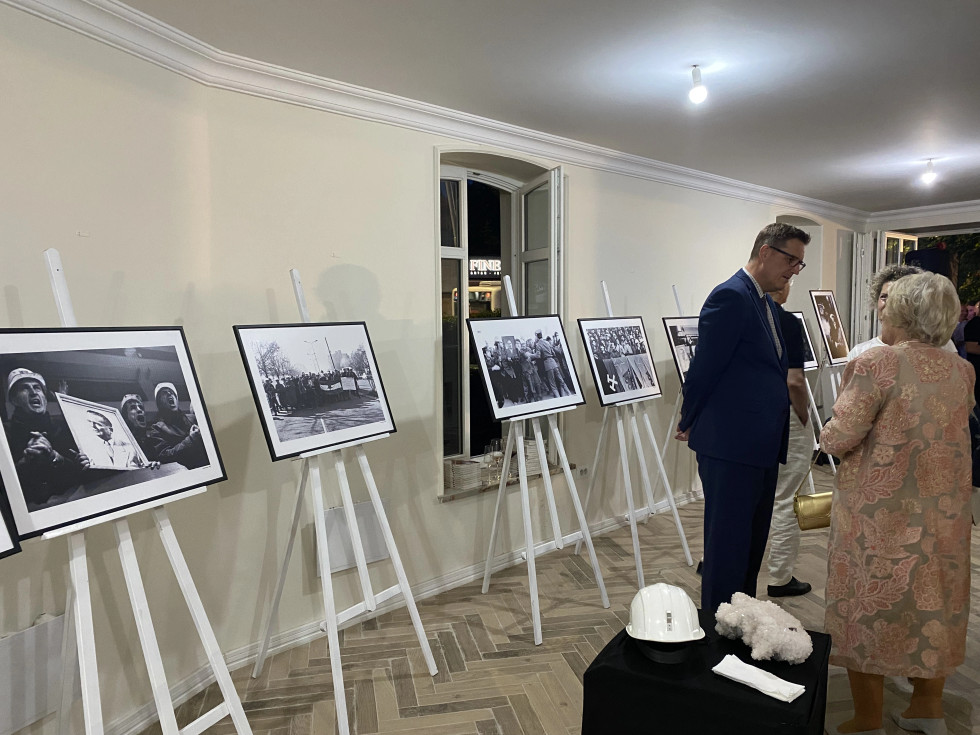
Writer Halil Matoshi, a journalist colleague of Reka's at the time and his friend, said that the most painful, but also most inspiring story of survival in our era is related to the miners. He said that 33 Chilean miners, in San José, on August 5, 2010, were trapped 700 meters deep in the Atacama Desert. He said that a documentary made about them inspired the Chilean national football team. According to him, the story of the Kosovo miners should inspire the national football team and politicians as well.
"The drama takes place on the inverted seventh floor, where sunlight does not shine, but takes the form of human eyes that emit snot."
The miners were transformed into sculptures of people begging for freedom.
Living monuments of flesh and painted with lead, beating with the last picks of their souls against the rusty gates of a bloody regime, sculpting with their cry the saga of Kosovo's freedom.
"A nation rose up, motivated by the willingness to sacrifice of these miners," he said. According to him, the miners, together with their leaders, Aziz Abrashi and Burhan Kavaja, dealt the first blow to this fascism.
"The second blow was the two fingers of Rugova's resistance and the third, for the finale, the bullet of the Kosovo Liberation Army," said Matoshi. According to him, the collective memory of the nation, without the history told through the photographs of maestro Reka, would lack the sublime act of drama, the cry.
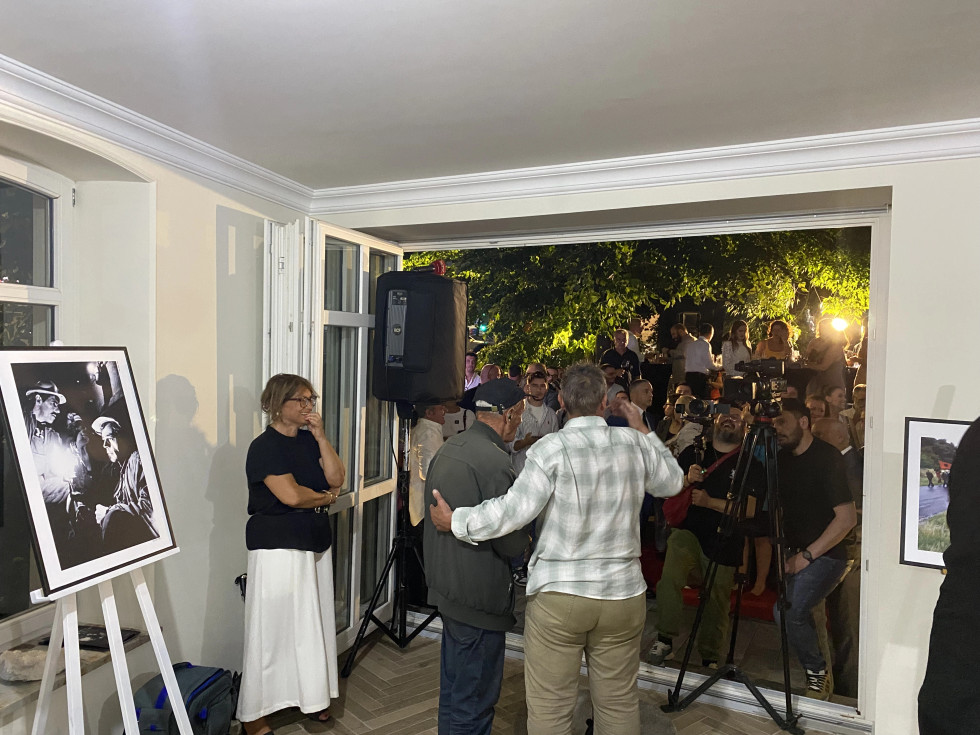
Burhan Kavaja, who was then the director of the Trepça Mine, indicated that the combine had 21,750 workers with an income of 200 million dollars and exports of 120 million dollars. He said that previously the combine found itself in difficulty for many reasons such as overemployment and loans that it did not use itself. According to him, Aziz Abrashi as the leader of the entire Combine, together with his staff, improved the situation.
"The supply was always made from Kruševci and this city had its greatest development from Trepça. It was interrupted and the supply was made by Kosovo companies. We destroyed the Serbian network and then it was easier for us to put up resistance," he said. He added that it is very important to know that part of the responsibility for the collapse of Yugoslavia lies with the miners who are in the images of Reka.
also 37 years since the miners' strike, Osmani: They became a symbol of courage
The author of the photographs himself has indicated that a colleague of his from Belgrade, for an Austrian agency, had reported that the miners supposedly go home in the evening and in the morning, cleaned up, join the strike.
"I showed him that it wasn't like that. In reality, they had warm water for washing, right there," said Reka. He said that after the war he was told that his photographs had enabled many miners to have their asylum applications accepted in different countries. But Reka's photographs also told many countries of the world about the drama in the Trepça mines. About the drama of the Kosovo Albanians.


