


New evidence shows that Ethiopia's prime minister, Abiy Ahmed, had been planning a military campaign in the northern Tigray region for months before war broke out a year ago, triggering a chain of destruction and ethnic violence that has engulfed Ethiopia, the country the second most populous in Africa
Secret meetings with a dictator. Clandestine movement of troops. Months of quiet preparation for a war that was supposed to be quick and bloodless.
New evidence shows that Ethiopia's prime minister, Abiy Ahmed, had been planning a military campaign in the northern Tigray region for months before war broke out a year ago, triggering a chain of destruction and ethnic violence that has engulfed Ethiopia, the country the second most populous in Africa.
Abiy, a Nobel Peace Prize laureate recently deemed tired of commanding troops on the battlefront, insists the war was on against him - that ethnic Tigre fighters fired the first shots in November 2020 when they attacked a federal military base in Tigray, butchering soldiers in their beds. That narrative has become a strong conviction for Abiy and his supporters.
Plan for revenge
In fact, it was a struggle for Abiy – a struggle fueled even before the 2019 Nobel Peace Prize that turned him, for a time, into a global icon of nonviolence.
also The most brutal war on the verge of explosion
The Nobel win came largely from the improbable peace deal Abiy struck with Isaias Afwerki, Eritrea's authoritarian leader, within months of coming to power in 2018. This pact ended two decades of hostility and war between the neighboring rivals and inspired high-profile figures for a transformed region.
Instead, Nobel encouraged Abiy and Isaias to secretly plot a strategy for war against their mutual enemies in Tigray, according to current and former Ethiopian officials who spoke on condition of anonymity to avoid reprisals or to protect family members. within Ethiopia.
In the months before fighting broke out in November 2020, Abiy moved troops into Tigray and sent military cargo planes to Eritrea. Behind closed doors, advisers and military generals debated the merits of the conflict. Those who disagreed were fired, interrogated at gunpoint, or forced to leave.
Still in awe of Abiy's Nobel, the West ignored those warning signs. But in the end it helped pave the way to war. "From that day on, Abiy felt he was one of the most influential figures in the world," Gebremeskel Kassa, a former senior Abiy administration official now in exile in Europe, said in an interview.
“He felt that he had a lot of international support and that if he went to war in Tigray, nothing would happen. And he was right," he added.
The quick and easy military victory that Abiy promised has not materialized. The Tigreans routed Ethiopian troops and their Eritrean allies over the summer and last month came within 160 miles of the capital, Addis Ababa - prompting Abiy to declare a state of emergency.
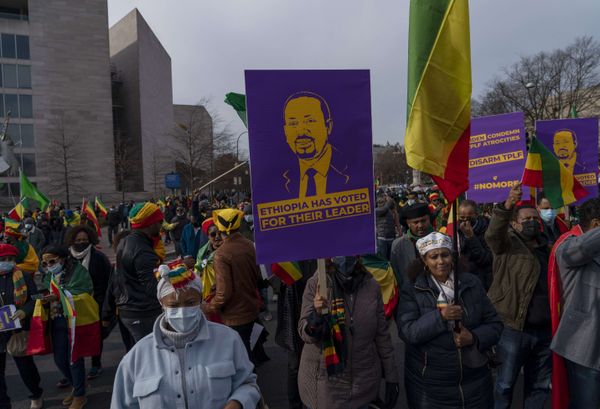
The big turn
Recently, the pendulum has swung, with government forces retaking two strategic towns that had been seized by Tigreans - the latest twist in a conflict that has already cost tens of thousands of lives and pushed hundreds of thousands into famine-like conditions. .
Analysts say Abiy's journey from peacemaker to battlefield commander is a cautionary tale of how the West, desperate to find a new hero in Africa, got this leader spectacularly wrong.
"The West must make up for its mistakes in Ethiopia," said Alex Rondos, once the European Union's top diplomat in the Horn of Africa. "It misjudged Abiy. He empowered Isaiah. Now the question is whether a country of 110 million people can is prevented from disintegration".
Accepting the Nobel Peace Prize in December 2019, Abiy, a former soldier, drew on his experience to eloquently sum up the horrors of the conflict.
"Back from Hell"
"War is the epitome of hell," he told a distinguished audience at Oslo Municipality. "I know, because I've been there and I'm back."
also Ethiopia's Hidden War
To his foreign admirers, the soaring rhetoric was further evidence of an extraordinary leader. In his first months in power, Abiy, then 41, released political prisoners, supported a free press and promised free elections in Ethiopia. His peace deal with divisive Eritrea was a glimmer of hope for the strife-torn Horn of Africa region.
Still, Norway's five-member Nobel Committee knew it was giving Abiy a chance, said Henrik Urdal of the Peace Research Institute in Oslo, which analyzes the committee's decisions.
"My partner and friend of peace," he referred to Abiy in Oslo.
Many Ethiopians also wanted to believe Abiy's promise. At a gala dinner for the new prime minister in Washington in July 2018, dr. Count Moussa, an Ethiopian living in Sweden, announced to applause that he was nominating Abiy for the Nobel Peace Prize.
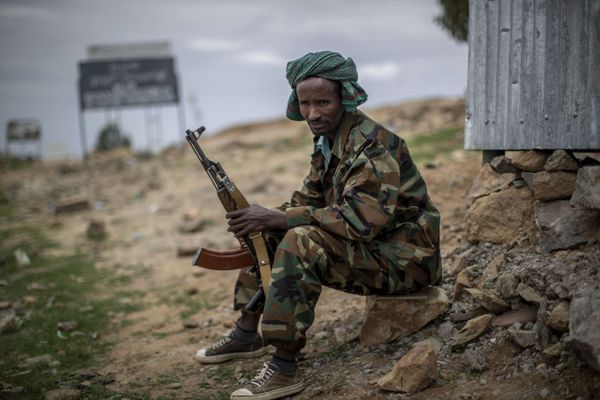
Consequences of the civil war
But the Prosperity Party met Abiy's ambitions, and in late 2019, violent clashes between police officers and protesters erupted across the Oromia region, culminating in the June 2020 death of a popular singer.
Ethiopian military cargo planes began making clandestine night flights to bases in Eritrea, a senior Ethiopian official said.
Abiy's top aides and military officials privately debated the merits of a war in Tigray, the former official said. Dissidents included Ethiopia's army chief, General Adem Mohammed.
At the time, the Tigreans were also preparing for war, seeking allies in the Northern Command, Ethiopia's most powerful military unit, which was based in Tigray.
In September, Tigreans went ahead with elections in open defiance of an order by Abiy. Abiy moved troops from the Somali and Oromia regions to Tigray.
In a video conference in mid-October, Abiy told ruling party officials that he would intervene militarily in Tigray and that it would take only three to five days to oust the region's leaders, said Gebremeskel, the former senior official, now in exile.
On 2 November, the European Union's foreign policy chief, Josep Borrell Fontelles, publicly called on both sides to stop "provocative military deployments". The following evening, Tigray forces attacked an Ethiopian military base, deeming it a preemptive strike.
Eritrean soldiers flooded into Tigray from the north. Amhara Special Forces arrived from the south. Abiy sacked General Adem and announced "law enforcement operation" in Tigray.
also "I can't escape", suspicions of abuse in Tigray, Ethiopia
Ethiopia's devastating civil war was underway.
Prepared by: Gent Mehmeti

