


-
By:
New York Times

-
Translated by: Blerta Haxhiu

- 29 October 2025 08:15
- Share to:
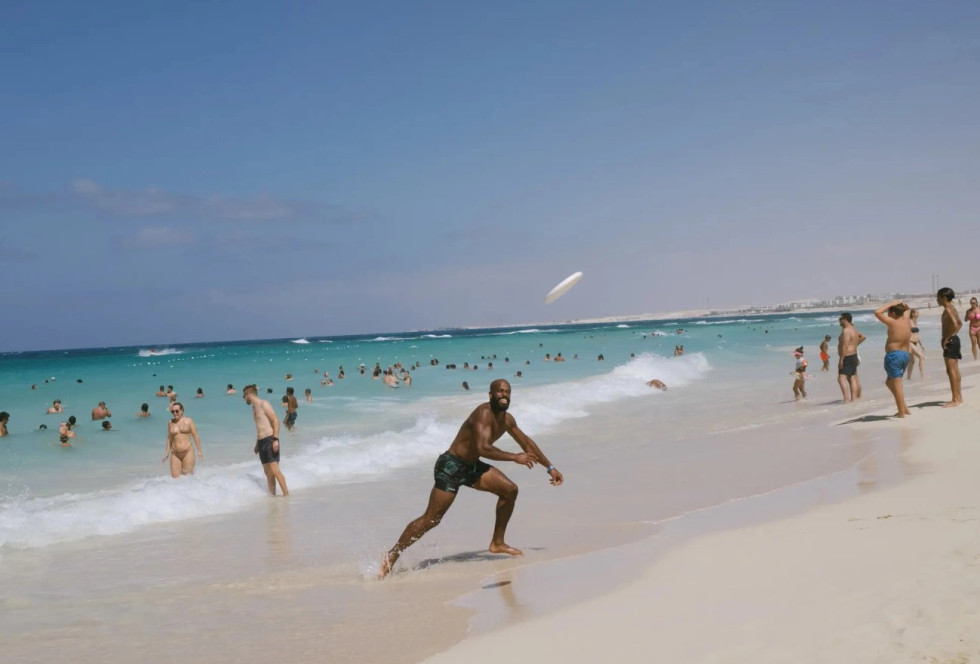
The sea looks the same. So does the sand. But in Egypt, two coastal communities, not far from each other, have completely different ideas about what fun and relaxing vacations mean.
There are no signs to let you know, as you drive along the sun-baked highway along Egypt’s Mediterranean coast, where the “Good Coast” ends and the “Bad Coast” begins. Good or bad, the waves are just as blue, the sand just as white and perfect.
But for Egyptians vacationing on the North Shore – who commute there from Cairo, just as New Yorkers go to the Hamptons or Michiganders “up north” – the difference is clear.
This is Sahel el-Tayeb, or "The Good Coast," as the Egyptians call it.
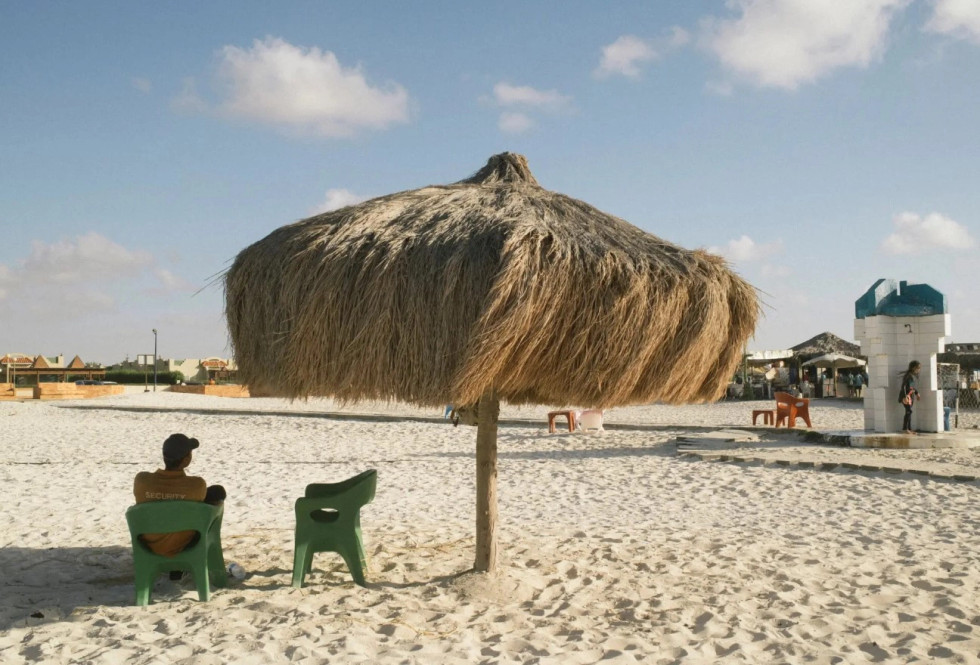
Simple, quiet, honest vacations, where there's not much to do except swim in the sea, read, and relax. Women wear burkinis and hijabs. Hotels and rental homes are simple, without excessive luxury. On the coast, modest cafes with plastic chairs serve fresh fish, and every few minutes street vendors pass by with frescas - honey cakes and trays of shellfish - traditional summer foods in the Sahel.
And then comes Sahel el-Shireer, the "Bad Coast."
also "Complete freedom": Why Italian women love the gender-segregated beach
Million-dollar beachfront villas, Louis Vuitton bags next to beach umbrellas, J. Lo concerts and parties where Peggy Gou DJs. Cairo’s most luxurious restaurants and boutiques have opened branches here. Women wear swimsuits, designer sunglasses and boho-chic veils. Just an hour west on the “Beauty Coast,” the same fresca cakes and clams cost more than twice as much, and for the price of a weekend you can vacation in St.-Tropez.
“It used to be: take four or five clothes, sandals and no makeup - that's enough,” says Aziza Shalash, 24, a graduate student who used to go to the Good Coast until her family bought a house in Almaza Bay, the main magnet for holidaymakers on the “Bad Coast.” “Now, when you go to the beach, you have to have your hair done, dress nicely, put on makeup and take photos for the internet.”
What distinguishes the beaches?
The divide between the “Good Coast” and the “Bad Coast” – two almost identical stretches of coastline, distinguished mainly by money, swimwear and alcohol – reflects a deep divide in Egyptian society, where social class is closely linked to attitudes towards freedom and Western lifestyles. But as economic crises have widened the gap between the wealthy class and the rest of the population, the increasingly elitist selection of places like the “Bad Coast” has even made some of the rich themselves wonder.
“It’s called ‘bad’ because they spend a lot of money,” says Mohieddin el-Ashmawy, 83, a retired naval officer who has spent summers on the “Good Coast” since before the “Bad Coast” existed. “There, every step you take, money talks.”
The class divide became more apparent than ever in 2022, when Egypt's already fragile economy crashed. Three years later, what's left of the middle class can barely afford school fees and meat, let alone beach vacations.
During the same period, exclusivity on the “Bad Coast” turned into outright exclusion. Instead of the previous looser system, where people could invite friends and family to the beach, communities began requiring QR codes, which are only given to owners or renters of villas. Some even require a different code to enter the beach.
These codes have become so popular that people are selling them online - a practice that has caused controversy and, as a result, a trend on TikTok.
Even on the "Good Coast", new developments are fenced, but the rules there are much more lenient.
“It’s like a border, really,” says Dalia el-Ghoneimy, 46, who visited Almaza Bay for the first time in July. “The beach shouldn’t be like this. The beach is for everyone.”
Once upon a time, it really was.
Rich or poor, many Egyptians spent their summers on the beaches around the Mediterranean city of Alexandria. Many of the poorest still do today.
But private developers have been moving further west along the coastline, first with simple resorts, then with increasingly modern, luxurious projects. Today, they also target wealthy tourists from the Gulf, Europe and elsewhere - anyone who can afford it. A week's stay in the summer season can cost upwards of $6.000.
Their glossy billboards dominate Cairo's dusty streets and coastal highway, selling a vision of the ideal summer: "Seazen - Find your peace." "Forever by the sea - Ras El-Hekma."
None of the smiling women in the ads have their hair or arms covered; every slogan is in English - the language that comes naturally to the Egyptian elite educated in international schools.
For wealthy, liberal Egyptians, the appeal is clear.
Sahelian gated communities like Almaza or Marassi - a super-luxury enclave built by a Dubai developer - are the summer version of the well-maintained suburban compound where they live and work year-round: clean, comfortable havens where they can do and wear whatever they want, without being judged by anyone.
also African city dwellers losing the battle with tourists
Judgments from both coasts
Most Egyptians are much more conservative and push such behavior behind closed doors in the rest of the country. As a popular saying goes, there are two Egypts: “Egypt” - that of the English-speaking elites and a liberal society - and “Masr” (which means Egypt in Arabic) - that of the rest of the population.
In the area called "The Good Coast," any mention of the nightlife or provocative clothing that occurs further south along the coast immediately causes discontent.
“But these girls have parents!” said el-Ashmawy, an early visitor to the “Good Coast,” indignantly, recalling a national scandal when two girls at a concert on the “Bad Coast” were filmed kissing the Lebanese singer on the cheek.
“It’s too much, too much freedom, and I don’t like it,” said Doaa Reda, 25, a teacher eating at a fish restaurant near the coastal highway. She cited videos she had seen on social media: “Egypt is a Muslim country. Parties and bikinis, these things are not part of Egyptian society.”
Many visitors to the “Bad Coast” openly admit that the area’s exclusivity is necessary to keep moral judgments at bay. The QR codes ensure that only “selected people” – those who “share the same culture” – are allowed in, said Mahmoud Abdoun, 56, who works in interior design.
He and his wife were sitting under a beach umbrella in Almaza, facing the sea, where warm waves gently lapped the sand. The water shimmered in shades of blue and light green. Pop music blared at the beach club next to them, while waiters brought out cold margaritas, avocado sandwiches, and plates of fresh mango. A purple boat that looked like a race car sped across the water, while a parachute flew overhead.
Some parents justify the closure of the community with the argument of safety.
"You want to relax in peace and the kids can run around freely," said Sherif Seif, 48, a marketing executive who was celebrating his son's birthday under a nearby beach umbrella.
Seif stressed that the "Sahel Coast" is not the only place in the world where people pay more for privacy and security. "It is a private complex with private apartments," he said.
In class-divided Egypt, it is difficult to separate social opinions from economic status. Many Egyptians, rich and ordinary, see this exclusivity as a form of institutionalized snobbery.
At Green Beach, a gated community on the “Good Coast,” Radwa, a translator reading a book and wearing a purple burkini, said she had never been to the “Bad Coast.” “I know I would judge them,” she said, “but they would judge me too, because I dress like this.”
However, divisions in the Sahel, like those across Egypt, are not always so clear-cut.
There are many Egyptians who can afford the luxury of the “Bad Coast,” but prefer the simplicity of the “Good Coast.” Some women without headscarves sunbathe on the “Good Coast,” while some women in burkinis swim on the “Bad Coast.”
Seif said that one morning he saw a man in religious clothing walking past him on the beach, while his phone broadcast verses from the Quran to the entire area.
He said that hasn't stopped him. Like many Egyptians who try to balance pleasure with faith, he prays on days when he doesn't drink alcohol, fasts during Ramadan and attends Friday prayers.
also Ionian Sea, in the kingdom of blueness and abuse
"That's why I have a problem with the labels 'Bad Coast' and 'Good Coast,'" he said. "Because in the end, it's all about you and what you choose to do."
Then he took a sip of his vodka and smiled.

