


-
By:
BBC

- 17 January 2024 08:30
- Share to:
Elmira claims she was tricked into going to Syria by a man who tipped her off online. He persuaded her to join him in Turkey and, thinking they would be happy together, four days after her 18th birthday he traveled to meet her. But when he got there he was greeted by another man who said he was his friend and took him on a 17-hour journey across the Syrian border. She claims that by the time she realized what was happening it was too late to turn back
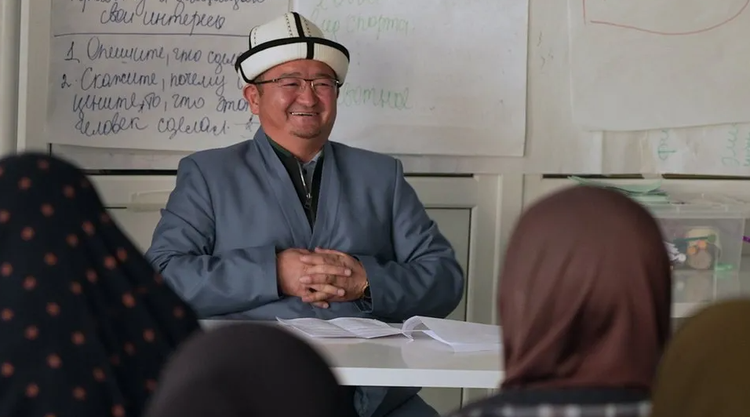
"Welcome back to Kyrgyzstan," says Shukur Shermatov, addressing the class of 20 women. He wears a traditional hat, but there is nothing traditional about this school. The facility is located inside two military security rings and the students are women who have been brought home from camps in Syria, where they ended up living with the Islamic State group.
The rehabilitation center is located in the mountains of Kyrgyzstan and is where the wives and children of suspected IS recruits spend the first six weeks after repatriation. Everything that happens here is monitored by the state.
The women listen attentively to Shukur as they hold their first lesson. The course offers lectures on citizenship, religious ethics and anger management. Posters on the wall offer advice on how to control emotions.
In addition to the re-education program, the families receive medical treatment, psychological support and - for the first time in many years - adequate food, water and shelter.
Against repatriation
also "Stateless" – inside ISIS's women's detention center in Syria
Some countries have objected to the repatriation of women like these - women who say they have unknowingly followed their husbands, fathers and brothers into war zones. What happened to them there - what they did, how much they knew - is hidden in the ruins of the so-called caliphate. Decisions about whether they are victims or perpetrators must now be made by officials, potentially thousands of miles away.
After class, we are taken to a simple dormitory with four single beds, where we meet a woman wearing a purple hijab. We are calling her Fatima, not her real name, for her safety. Through a small window, the snowy lakeside landscape couldn't have looked more different from the Syrian camp she left behind.
"The main thing here is that it's quiet. Everyone is very grateful for that. The kids like it." She pauses and appreciates the silence. "Peace".
Fatima followed her husband to Turkey in 2013 when he said he wanted to work there. The whole family went, including Fatima's two grown sons, her daughter and a grandson. She says she only realized they were in Syria when she heard the sound of jets and saw IS guards.
We asked her if she really had no idea where they were going and, like many of the women we met, she insisted that she had no idea and that it was normal for a woman to follow her husband.
A few days after their arrival in Syria, she had lost her husband and son. Her husband was burned to death after a bomb hit his car, while her son was shot by a sniper. Soon after, her other son fell ill and died.
Unable to leave, the women spent nearly six years under the brutal rule of IS in Iraq and Syria, where Fatima's daughter had more children. When IS fighters were driven out, Fatima, her daughter and four grandchildren ended up in al-Hol, Syria's largest detention camp for suspected IS fighters and their families. They spent four years there, desperate to come home.
"The women were sick and the children were crying all the time. We begged them to let us go," she says. "We barely survived. When the people from Kyrgyzstan came to take the first group, everyone was shocked."
In October, her daughter and grandchildren were told they were being repatriated, but not Fatima.
"I cried when they told me that I was not on the list. How was I not on the list? I am their mother!". "But now that I'm here and soon I'll be back with my family, I'm very happy. I am glad that my grandchildren can get an education. I want them to study science, to understand the world better."
Returning to the homeland
At 57, Fatima is the oldest at the rehabilitation center, one of 110 Kyrgyz mothers and 229 children returned from Syria in 2023 as part of the new repatriation program. Only Iraq repatriated more women and children last year.
Kyrgyzstan plans to return at least 260 more women and children, after years of campaigning by relatives of people trapped in Syria. The aim is to give a second chance to people the government believes may have been victims of ISIS.
However, returnees are all interrogated and remain under regular surveillance after completing the reintegration course. Nine out of 10 are facing criminal investigations, the head of Kyrgyzstan's national security council told us. Possible charges could include aiding terrorism or transporting children to a war zone. However, no one has been prosecuted yet.
Constant surveillance and the potential for criminal proceedings mean women are often reluctant to talk about their time in Syria.
After Elmira, who has been through the rehabilitation center and is now rebuilding her life in a city outside the capital, Bishkek, agrees to speak with us, we get a glimpse of what this monitoring looks like.
Shortly after we got ready to see her, her social worker called us, informing us that she would also be present for the interview. When we arrived, there were also two anti-terrorism police officers there, whom the family recognized. After some discussion, they agreed to wait outside.
Elmira claims she was tricked into going to Syria by a man who tipped her off online. He persuaded her to join him in Turkey and, thinking they would be happy together, four days after her 18th birthday she traveled to meet him.
also Children of the Caliphate: How a new generation is growing up in the shadow of ISIS in Syria's camps
But when she got there, she was greeted by another man who said he was his friend and took her on a 17-hour journey across the Syrian border. She claims that by the time she realized what was happening, it was too late to turn back.
She married twice. Her first husband died after a few months, then she married a man from Dagestan and gave birth to his child. She won't say more about what he was doing in Syria, but explains that they were looking for a way out before he died in a missile attack.
Fear of returnees
Elmira says the hardest moment was when she thought her daughter might be dead. She was out leaving her young daughter at home when the rockets hit their neighborhood. Terrified for her child, Elmira ran home in tears.
"Then someone brought her out, alive, safe, and she was just afraid. The neighbor's house was hit and the other children who were nearby died."
Like Fatima, Elmira and her daughter ended up in al-Hol camp.
"I still don't believe it. "Sometimes I wake up at night and I don't know if I'm dreaming," she tells us. "I am very grateful to all those who helped to get us out of there and did not abandon us. We know that not every country does this."
Elmira, who is now training to be a seamstress, asked us not to reveal her real name. After seeing the response to the repatriations from some Kyrgyz on social networks, she has decided not to tell anyone about her past.
"It's not for show," she says. "Many of us do not understand why they fear us. We are afraid of them! People think we are back here with machine guns and guns. It's not like that. We are human just like them. We also have it in our family. We also have children. We also want to lead a peaceful and happy life."
"And why should I tell people my story, when I myself want to forget?", adds Elmira. "I was 18 years old then. I am 27 years old now. I have learned not to be so naive".
Elmira's mother, Hamida Yusupova, has spent the past decade pleading with Kyrgyz authorities to return her daughter and granddaughter and founded a campaign group for parents of girls who went to Syria.
When Hamida came to pick them up from the rehabilitation center, their reunion spoke more with tears than words.
"Elmira had become a mother. She realized how difficult it is when she raises a child for 18 years and, one day, is told that she is "going to work", closes the door and disappears to Syria. I don't wish it on any mother", says Hamida.
"All Elmira could say was: 'Mom, I'm sorry.' Nothing else. In addition, she told me how old I was!
Elmira and Hamida know very well that not everyone around them will forgive them.
Like many of its Central Asian neighbors, Kyrgyzstan - where 90% of the population identifies as Muslim - was a major source of recruitment for IS, a UN-designated terrorist group, during its rise to prominence.
Hamida thinks that her daughter was a victim of manipulative men and only guilty of being naive. However, we spoke to Kyrgyz women the same age as Elmira, who said they felt worried that those returning from Syria could radicalise others, especially after seeing how the Taliban had retaken Afghanistan.
"As a mother, I have heard many insults and insults. I don't want my child to hear this. I don't want people to point fingers at my child and call him a terrorist," says Hamida.
also After a decade in Turkey, the Syrian refugee returns home, shocked by what he finds
Translated by: Blerta Haxhiu

