


Gazans trapped in the West Bank are living in fear of arrest and the safety of their families. The war has separated thousands of Palestinian family members from one another, including children like Mohammed, who was forced by Israeli soldiers to cross into the occupied West Bank while his family is in Gaza. He showed a video of his cousin crying next to the dead body of his father, Mohammed's uncle – leaving him the only surviving member of his immediate family. "I would like him to die. I would like him to go with his family," Mohammed said
"I want the war to end and go back to Gaza," said Mohammed Abu Seef, an 11-year-old boy, holding back tears. "Please stop it. We are losing our loved ones."
Mohammed has spent his entire life in the besieged Gaza Strip, apart from his trips to the Israeli city of Herzliya, where he received medical treatment, and has since become a nightmare.
On October 7, an unprecedented attack by Hamas resulted in the deaths of more than 1.400 people in Israel. More than 200 Israelis – including dual citizens – were taken hostage and brought to Gaza. Hamas said its actions were a response to what it described as decades of atrocities committed against Palestinians and their holy sites.
Since then, more than 10 people in Gaza, including at least 3.800 children, have been killed by Israeli airstrikes and, now, by a ground invasion.
But the war has also separated thousands of Palestinian family members from one another, including children like Mohammed, who was forced by Israeli soldiers to cross into the occupied West Bank while his family is in Gaza.
also The horror in Gaza in the eyes of a doctor
The United Nations has estimated that more than 45 percent of homes and a significant portion of civilian infrastructure in Gaza have been leveled by Israeli bombardment.
Two hours after Al Jazeera spoke to him in a makeshift camp in the northern West Bank city of Nablus, we received word that Mohammed's younger brother and sister had been killed in an Israeli airstrike at his home in the Jabalia refugee camp in Northern Gaza.
So far, no one has been able to break the news to him.
Uncertain future
Mohammed still remains in the temporary camp at Nablus Municipal Stadium along with more than 200 other displaced people from Gaza.
But the country's future is uncertain. So is the fate of its inhabitants.
Before October 7, about 18.500 people from Gaza had permission to work in Israel. Since then, thousands of them have been arrested and others have disappeared – rights groups and unions have warned that large numbers of workers may be in Israeli detention camps.
In addition, as of October 12, Israel has deported at least 600 workers from Gaza to the West Bank. Now, regional sources say, more than 5.500 Gazans are estimated to have been stranded in the West Bank since October 7.
"I don't think I'll grow up"
For the past three months, Mohammed has been separated from his family. Initially, he received treatment for a severe arm fracture at a hospital in Herzliya.
But when war broke out on October 7, soldiers removed him from the hospital and forced him to cross the border on foot through military checkpoints in the West Bank.
"I was in the hospital, but they took me out," Mohammed told us. “I went to Nazareth until things calmed down so I could go back to the hospital for treatment, but they chased us and kicked us out. We started running because if they caught us, they would hold us hostage. Thank God I had my cousins with me. But I haven't seen my family for the last three months. I miss them a lot and I talk to them every day."
When asked about his hopes for the future, Mohammed said: "I don't think I'll grow up to be anybody."
“I'm just thinking about building a new house for my family. I don't want my mother to be forced to move from one house to another."
Mohammed's house and the entire neighborhood in the Jabalia refugee camp were destroyed during Israel's bombing of the Hamas-controlled enclave.
His family, he said, is currently staying with an uncle.
"But my other uncles went to God. One of my henchmen built the building where the rest of my family was hiding, but the Israelis bombed it without warning and killed my two henchmen and their entire family."
He showed us a video of his cousin crying next to the dead body of his father, Mohammed's uncle – leaving him the only surviving member of his immediate family.
"I would like him to die. I would like him to go with his family," Mohammed said.
A campaign of detentions
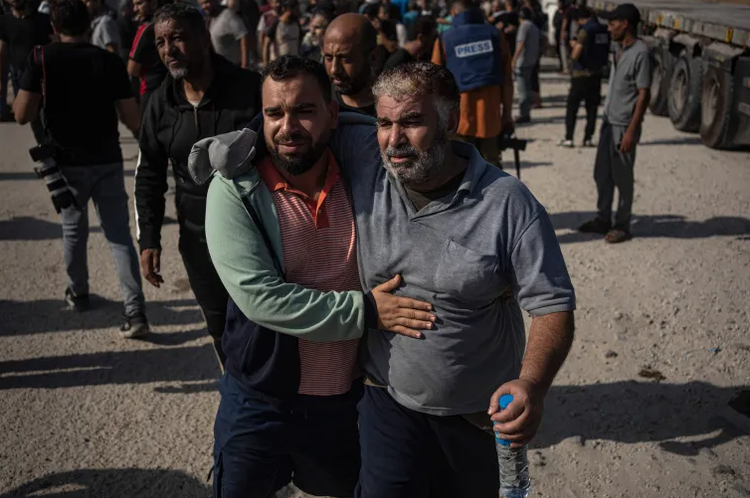
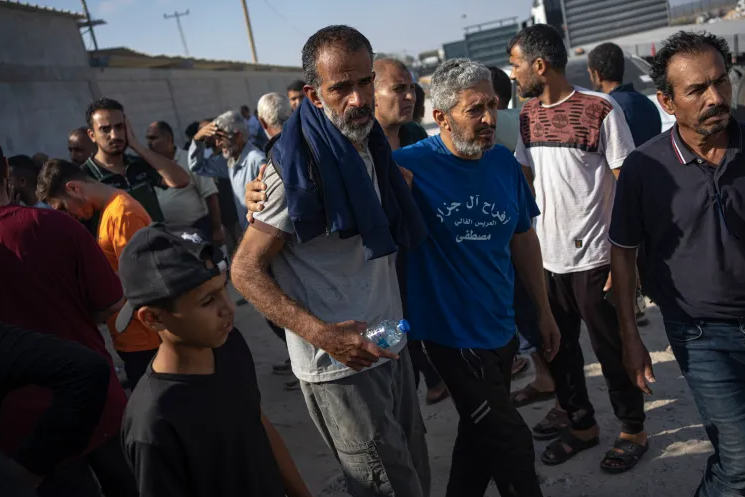
After Israeli military raids and a series of arrests in shelters in the nearby cities of Hebron and Bethlehem, those taking refuge in Nablus are terrified that they too may be arrested by Israeli forces.
The raids in the West Bank are part of a wider campaign of arrests with at least 1.900 Palestinians arrested since the outbreak of the war.
Most of the 425 people sheltering in Nablus are men who had permits to work outside Gaza.
Those displaced in Nablus are gripped by fear for the fate of their family members who remained in Gaza.
"My wife is calling me, asking me when she and my son will die," said a man who had been working in Israel as a nurse on October 7.
also "I came back alive, but everything was gone"
His wife and their young child had been staying with family in Shujaiya, Gaza, before the war broke out. He asked to remain anonymous.
"She tells me that if we see each other again, it's a blessing, and if not, that's what God wants," he added. “Nothing breaks your heart more than to hear your wife cry and say she is waiting for her death. Her mental health is deteriorating. Every time I call her, she cries and asks me what's going on with her."
"All the workers here in Nablus, we are just bodies without a soul"
Volunteers running the camp in Nablus have told him and other people there that food and water are running out and the camp may not be able to stay open much longer.
"All of us workers here in Nablus are basically just bodies without a soul," he added. "Everyone is worried about their families, we are very worried and stressed."
In Shujaiya in Gaza, his family is living in a house that houses more than 50 people, he said.
"They are all waiting to die."
He said his father was initially "convinced" that he and his family "were going to die in their house" after Israeli warnings of bombing.
But after advice from friends and family members, he finally relented and accepted that he had to move into the house they are in now - just hours before their neighborhood was razed to the ground.
"I am dead. I have no feelings"
Sulaiman Amad is an academic at An-Najah National University in Nablus, who leads a team of 15 volunteers who are managing the shelter site at the stadium.
"I am dead," he said. "I have no feelings. Many of my friends have been killed by Israel, so when you miss or lose your family, you lose your emotions."
Amid increasing arrests by Israeli forces in the West Bank, Sulaiman said he does not know how long the stadium will be a safe place for workers from Gaza.
"I was told that there may be arrests in this building as well. I don't know," he said.
But although numbed by the death and destruction that has engulfed Gaza, and increasingly the West Bank, Sulaimani is careful not to do anything that might cause ill feelings for Gazan workers.
"When my daughters come to help me, I make them stay in the car so that the workers don't think about their children."
A 33-year-old man from Khan Younis in Gaza, who asked to remain anonymous, said: “I try to call my family 20 to 30 times a day. Yesterday I tried to call my brother to see if he was bombed or not."
He said residents of his family's neighborhood in northern Gaza had been ordered to move south near the Egyptian border.
"My family lives in the school and hospital, in the areas where the Israelis asked us to evacuate," he said.
"But nowhere is safe. All the places they were told to go were bombed. In 2014, Israel bombed my family's house, so I rebuilt it, and now it's bombed again. There is no real life - no physical or mental rest."
"I just want to go back and die with my family"
Just before Al Jazeera left the camp, a quiet, 28-year-old man from Shujaiya spoke to us, also on condition of anonymity.
After we asked him what he thinks awaits him, he said: “There is no future. I just want to go back to Gaza and die with my family. Will they be alive? Will I be able to find them?”
But the man who worked in Israel as a nurse intervened: “I will not answer like him. I don't want to wait for death."
also "We pray that the visa comes before death": Wounded Palestinian children trapped in uncertainty
"I want my son to grow up and become useful to society. He doesn't deserve to die, he didn't do anything. He's just like any other child in the world, who deserves to live his life to the fullest, so I don't want to die until that happens."
(Translated by: Forca Jashari)

